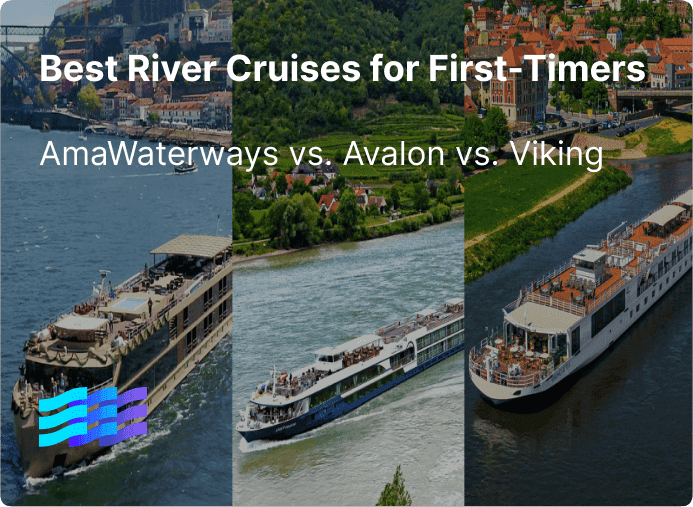
Best River Cruises for First-Timers: AmaWaterways vs. Avalon vs. Viking
AmaWaterways, Avalon Waterways, and Viking River Cruises are three of the best-known river cruise lines for North American travelers—and each takes a meaningfully different approach to the experience. For first-timers, the right choice depends on how much structure you want, how important cabin space is, and whether you prioritize cultural depth or flexible exploration.
What Makes River Cruising Different from Ocean Cruising

River cruises operate on an entirely different logic than ocean sailings. Ships typically carry around 128 to 196 passengers on European rivers, depending on the ship and itinerary—compared to thousands on large ocean vessels. They dock in the heart of cities rather than at distant port terminals and move slowly enough that you can watch medieval castles drift past your window over breakfast. There are no sea-day stretches with nothing to see—most itineraries bring a new town almost every day, and many ports are walkable from the dock.
For travelers new to cruising, this format removes a lot of the overwhelm. The smaller scale means you’ll likely recognize fellow passengers by day two, service can feel more personal, and the daily rhythm of sail-wake-explore-sail is genuinely restful. If you're newer to cruising in general, our guide on how to plan a cruise covers the foundational decisions before you commit to any specific line.
Pro Tip: The Rhine and Danube rivers are the two best starting points for first-time river cruisers. Both pass through multiple countries in a single week, offer excellent port infrastructure, and have the widest range of departures across all three lines compared here.
AmaWaterways: Best for Active Travelers and Food Enthusiasts

AmaWaterways positions itself at the upper end of the mainstream river cruise market, with a particular emphasis on culinary experiences and active excursion options. Founded in 2002, the line currently operates more than 25 ships across European, Southeast Asian, and African waterways.
What sets AmaWaterways apart:
- Twin-balcony cabins: Many staterooms on AmaCerto, AmaLea, AmaViola, and other ships feature both a French balcony (floor-to-ceiling sliding doors) and a full outside balcony—a design exclusive to AmaWaterways in this segment.
- Active excursion tracks: Every port offers tiered excursion options labeled Gentle, Regular, Active, and Bike—so a couple where one partner wants a leisurely walking tour and the other wants a 25-kilometer cycling route can split off and meet back at the ship.
- Chef's Table dining: An included specialty dining experience on many AmaWaterways Europe sailings, featuring a multi-course tasting menu with wine pairings.
- Wellness programming: AmaWaterways ships include a small fitness center, a heated pool with a swim-against current feature, and spa services—more than most competitors at this price tier.
Pricing context: AmaWaterways fares vary widely by itinerary, sailing date, ship, and promotion. For European river cruises, entry-level pricing typically starts in the low-$2,000s to $3,000s per person, with higher prices for premium cabins and peak-season departures. Fares generally include accommodations, meals, wine and beer with lunch and dinner, Wi-Fi, and a range of shore excursions. Additional perks—such as gratuities or enhanced beverage offerings—may be included depending on the specific itinerary or promotion, so it’s important to review what’s bundled at the time of booking.
Best AmaWaterways ship for first-timers: AmaViola on the Danube, or AmaMagna—a wider-hulled ship that carries 196 guests and features four restaurants, multiple bars, and significantly larger cabin footprints than standard river vessels.
Avalon Waterways: Best for Cabin Comfort and Independent Exploration
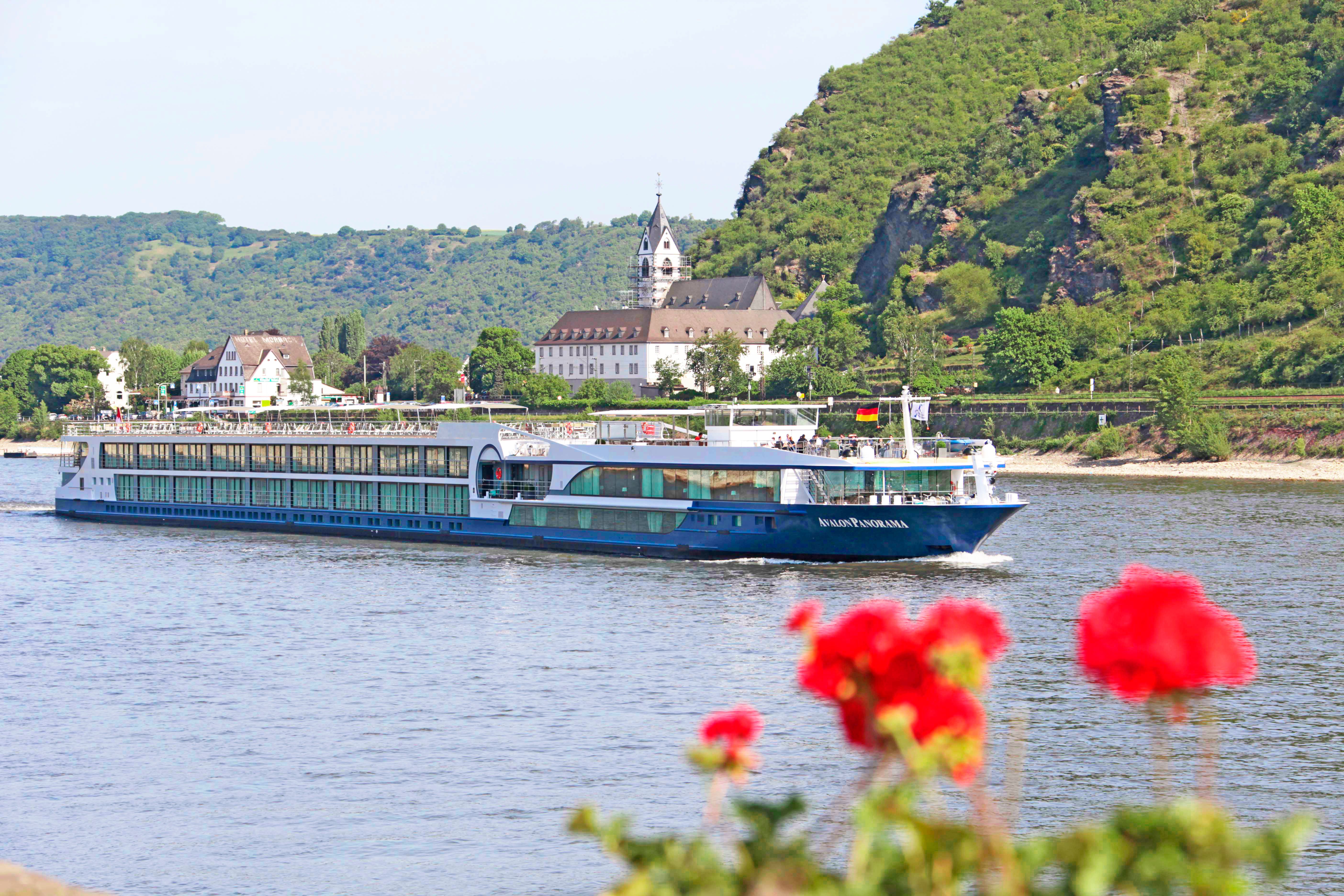
Avalon Waterways, part of the Globus family of travel brands, built its identity almost entirely around one product innovation: the Panorama Suite. Introduced across its Suite Ship fleet, these staterooms feature a wall of windows that opens to create an 11-foot-wide open-air balcony across the entire width of the cabin. The result is a cabin that feels significantly larger than its square footage suggests.
What sets Avalon apart:
- Panorama Suites: At approximately 200 square feet with that full-width window wall, these cabins are among the most distinctive in river cruising. The bed faces the river view rather than the wall—a detail that sounds minor until you're watching the Rhine valley wake up from under your duvet.
- Avalon Choice excursions: Avalon’s flexible excursion model lets passengers choose from multiple tour options at each port rather than following a single group. Options include Classic tours, Active tours, and Discovery tours (more immersive, experience-focused activities).
- My Avalon customization: The line's pre-trip planning portal lets first-timers pre-select excursions, dietary preferences, and activity levels before boarding—reducing decision fatigue on day one.
- Relaxed onboard atmosphere: Avalon ships tend to have a quieter, less programmed feel than Viking or AmaWaterways. There's less structured entertainment and more emphasis on the destination itself.
Pricing context: Avalon fares vary by itinerary, year, cabin category, and promotion, with current European sailings typically starting in the low-$2,000s to high-$3,000s per person. Fares generally include accommodations, meals, wine and beer with meals, Wi-Fi, and at least one shore excursion per port, while gratuities and additional options may vary by itinerary or promotion.
Best Avalon ship for first-timers: Choose a Suite Ship itinerary with Panorama Suites, especially on the Danube or Rhine, where Avalon’s bed-facing-the-view cabin design is most compelling.
Pro Tip: Avalon's Suite Ships position the bed facing the window wall, meaning you get river views from bed. Request a cabin on the upper deck (Panorama Deck) for the best vantage point and to avoid noise from the gangway area on lower decks.
Viking River Cruises: Best for Cultural Immersion and First-Time Simplicity

Viking is the largest river cruise operator in the world, with one of the most extensive river cruise fleets. For first-timers specifically, Viking’s combination of transparent, inclusive-style pricing, consistent ship design, and culturally focused programming makes it one of the most straightforward entry points into river cruising.
What sets Viking apart:
- Clear core inclusions: Viking fares include onboard meals, one complimentary shore excursion in each port, Wi-Fi, beer, wine and soft drinks with lunch and dinner, port taxes and fees, enrichment programming, and transfers when air is purchased through Viking. Optional excursions, gratuities, premium beverages, and some transfers cost extra.
- Consistent Longship design: Every Viking Longship (built from 2012 onward) follows the same layout—190 guests, an Aquavit Terrace at the bow, a two-deck atrium, and standardized cabin categories. First-timers don't need to research individual ships; the experience is consistent fleet-wide.
- Cultural programming: Viking's onboard lectures, destination-focused documentaries in the ship's library, and port talks are more developed than most competitors. The line explicitly targets "curious travelers" rather than those seeking nightlife or entertainment.
- Scale advantage: With more ships than any competitor, Viking offers the widest range of departure dates, seasonal itineraries, and combination voyages (e.g., Grand European Tour from Amsterdam to Budapest, 15 nights).
Pricing context: Viking fares typically start from around $2,500–$3,500 per person for a 7-night European sailing, making it one of the more accessible price points among the three lines compared here. However, prices vary by sailing date, cabin category, and promotion, and additional costs such as gratuities, optional excursions, and upgrades can affect the total price.
Best Viking itinerary for first-timers: Romantic Danube (8 days, Regensburg to Budapest or similar routes) or Rhine Getaway (8 days, Basel to Amsterdam or reverse). Both are heavily trafficked routes with excellent port infrastructure and multiple departures throughout the season.
For travelers considering whether river or ocean is the right Viking format, our comparison of Viking Ocean vs. River Cruises breaks down the differences in detail.
Ship Size and Cabin Comparison
All three lines operate similar-sized vessels by necessity—European river locks and bridges impose hard limits on ship width and height. But within those constraints, cabin design varies considerably.
| Feature | AmaWaterways | Avalon Waterways | Viking River |
|---|---|---|---|
| Passenger capacity | 128–196 | 128–166 | 190 |
| Standard cabin size | 160–235 sq ft | 170–200 sq ft | 135–150 sq ft |
| Signature cabin | Twin-balcony stateroom | Panorama Suite (200 sq ft, full-width window wall) | Explorer Suite (445 sq ft) |
| Balcony type | French + outside balcony (most ships) | Full-width opening window wall | French balcony (most categories) |
| Fitness facilities | Pool, fitness center, spa | Fitness center | Fitness room |
| Ship design year | 2010–present | 2011–present | 2012–present (Longships) |
Pro Tip: Viking's standard Veranda Staterooms (150 sq ft) are the smallest of the three lines. If cabin space matters to you, upgrade to a Viking Explorer Suite or consider Avalon's Panorama Suites as your baseline.
Dining and Inclusions Compared

What’s included in the base fare is where these three lines diverge most meaningfully—and where first-timers often get caught off-guard by the true cost of a river cruise.
All three lines bundle more than a typical hotel-based trip, but none should be described as fully all-inclusive without checking gratuities, premium drinks, optional excursions, transfers, and extensions.
| Inclusion | AmaWaterways | Avalon Waterways | Viking River |
|---|---|---|---|
| All meals | ✅ Included | ✅ Included | ✅ Included |
| Wine/beer with meals | ✅ Included | ✅ Included | ✅ Included |
| Premium spirits | Not included; available for purchase or via packages (varies) | Not included; available for purchase or via packages (varies) | Not included; available for purchase or beverage package |
| Shore excursions | ✅ One per port included | ✅ One per port included | ✅ One per port included |
| Gratuities | Varies by itinerary/promotion (sometimes included) | Typically additional | Not included in base fare |
| Wi-Fi | ✅ Included | ✅ Included | ✅ Included |
| Airport transfers | Not included (add-on) | Not included (add-on) | Included with Viking Air; otherwise additional |
| Specialty dining | ✅ Chef's Table included | No dedicated specialty restaurant | No specialty restaurant; alternative venues available |
Dining quality notes: AmaWaterways is widely regarded for its strong culinary program, with an emphasis on regional cuisine and its Chef’s Table specialty dining experience. Viking’s dining is generally described in reviews as consistent and reliable across its fleet—well-executed but less of a focal point than on some competitors. Avalon’s dining tends to fall between the two, with a focus on European regional dishes and a slightly more relaxed, casual service style.
Pro Tip: On all three lines, wine and beer included with meals are generally good quality rather than basic house pours. AmaWaterways in particular emphasizes regional sourcing, so you may find wines that reflect the itinerary—such as Alsatian Riesling on the Rhine or Austrian Grüner Veltliner on the Danube.
Itineraries and Destinations
All three lines concentrate heavily on European waterways, with secondary programs in Southeast Asia (Mekong River) and, for AmaWaterways, Africa (Chobe River). For first-timers, Europe is typically the best starting point.
Most popular first-timer itineraries by line:

AmaWaterways
- Tulips & Windmills (7 nights, Amsterdam round-trip) – Spring tulip season specialist
- Danube Waltz (7 nights, Passau to Budapest) – Covers Austria, Slovakia, Hungary
- Taste of Bordeaux (7 nights, Bordeaux round-trip) – Wine-focused, smaller river system

Avalon Waterways
- Danube Dreams (8 days, Vilshofen to Budapest or reverse)
- Romantic Rhine (8 days, Basel to Amsterdam or reverse)
- Paris & the Heart of Normandy (8 days, Seine River round-trip from Paris)

Viking River Cruises
- Romantic Danube (8 days, Regensburg to Budapest or reverse)
- Grand European Tour (15 days, Amsterdam to Budapest) – One of the most popular long river cruise itineraries in Europe
- Rhine Getaway (8 days, Basel to Amsterdam or reverse)
A note on season: All three lines operate primarily from March through November on European rivers. Spring (April–May) brings tulip season on the Rhine and generally lower crowds. Summer (June–August) is peak season, with the highest prices and busiest ports. Fall (September–October) offers harvest festivals, wine season, and some of the most scenic landscapes. Christmas market cruises (late November through December) on the Rhine and Danube are among the most in-demand river cruise experiences—book 12–18 months in advance for preferred cabin categories.
Pricing and Value Breakdown
River cruises appear expensive at first glance—but the all-inclusive nature of most fares changes the value calculation significantly. When you factor in meals, excursions, and beverages, the per-day cost compares favorably to a land-based European itinerary with similar logistics.
| Line | Starting Fare (7-night Europe) | Gratuities | Excursions | Beverages | Effective Value Tier |
|---|---|---|---|---|---|
| Viking | ~$2,500–$3,500 pp | Additional | Included (1/port) | Wine/beer w/ meals | Best entry value |
| Avalon | ~$3,200–$3,800 pp | Typically additional | Included (1/port) | Wine/beer w/ meals | Mid-tier value |
| AmaWaterways | ~$3,000–$4,500 pp | Varies by itinerary/promotion | Included (1/port) | Wine/beer w/ meals | Premium value |
Fares are approximate ranges based on standard cabin categories for 2025–2026 sailings. Suite categories and peak-season departures will price higher.
Where the real cost differences emerge:
- Gratuities: Viking typically adds gratuities as an additional cost (often around $15–$18 per person per day), while AmaWaterways and Avalon may include them on some sailings depending on itinerary, market, or promotion. On a 7-night sailing for two, gratuities can add roughly $200–$250 to the total cost when not included—so always confirm what’s bundled at the time of booking.
- Upgrade excursions: All three lines offer premium excursions beyond the one included per port. These typically run $30–$80 per person per excursion. AmaWaterways' active bike tours are often included; Viking and Avalon may charge for equivalent active options.
- Pre/post cruise extensions: All three lines offer land extensions (e.g., 2 nights in Prague before a Danube sailing). These are worth comparing carefully—prices vary significantly for equivalent hotel quality.
Pro Tip: Viking frequently runs two-for-one promotions and air credit offers, particularly for early bookings (12+ months out) and shoulder season departures. These promotions can close the gap between Viking and AmaWaterways on effective per-person cost considerably.
Which River Cruise Line Is Right for You?
The best line for a first-timer depends on three variables: budget, cabin priorities, and how much structure you want.
Choose AmaWaterways if:
- You prioritize food and wine experiences over everything else
- You want active excursion options (cycling, hiking) without paying extra
- You're traveling as a couple and want the most romantic cabin design (twin balconies)
- Budget is secondary to quality
Choose Avalon Waterways if:
- Cabin space and natural light are your top priorities
- You prefer a relaxed, low-pressure onboard atmosphere
- You want flexibility in how you explore each port
- You're traveling with someone who has mobility considerations (the open window wall eliminates the step-over threshold of a traditional balcony)
Choose Viking River Cruises if:
- You're booking your first river cruise and want the simplest, most transparent experience
- Cultural programming and destination learning matter to you
- You want the widest selection of itineraries and departure dates
- You're considering a longer combination voyage (Viking's Grand European Tour is the benchmark itinerary in the category)
For travelers weighing whether a river cruise or a premium ocean cruise better fits their travel style, the comparison between Viking Ocean vs. Oceania Cruises offers useful context on how these product philosophies translate to different vessel formats.
Booking Tips for First-Timers
Book early for Christmas markets. Rhine and Danube Christmas market cruises (typically mid-November through late December) are the single most in-demand river cruise product globally. Preferred cabin categories on AmaWaterways and Viking sell out 12–18 months in advance. If this is your target, treat it like booking a holiday flight—early is always better.
Go downstream when possible. Downstream sailings (e.g., Regensburg to Budapest on the Danube, Basel to Amsterdam on the Rhine) can offer slightly smoother travel and, in some cases, marginally more time in port, since the current assists rather than resists the ship. Not all itineraries offer both directions, and in practice, sailing dates, port timing, and itinerary details often matter more than direction when choosing between options.
Cabin category matters more than on ocean ships. On a 190-passenger river ship, the difference between a standard cabin (150 sq ft on Viking) and a suite (445 sq ft) is dramatic in a way that doesn't translate to ocean ships at the same price differential. If you're going to upgrade anywhere, do it on the cabin.
Consider a repositioning or combination voyage. All three lines offer longer itineraries that combine multiple rivers (Rhine + Main + Danube, for example). These are more expensive but eliminate the logistical friction of booking separate sailings. Viking’s Grand European Tour is one of the best-known long European river cruise itineraries, combining the Rhine, Main, and Danube between Amsterdam and Budapest.
Travel insurance is non-negotiable on river cruises. Low water levels (drought) and high water levels (flooding) can cause itinerary modifications or ship substitutions—particularly in summer and spring. All three lines handle these situations professionally, but having cancel-for-any-reason coverage gives first-timers peace of mind that's genuinely worth the cost.
For more general first-timer guidance on the booking process itself, our how to book a cruise guide walks through the full decision sequence from deposit to departure.
Key Takeaways
- Viking is the best starting point for most first-timers: transparent all-inclusive pricing, consistent Longship design, and the widest range of itineraries and departure dates make it one of the easiest entry points into river cruising.
- AmaWaterways delivers the best food and the most sophisticated active excursion program—worth the premium for travelers who prioritize culinary experiences and cycling options.
- Avalon offers the most distinctive cabin design in the category (Panorama Suites with full-width window walls) and the most relaxed onboard atmosphere—ideal for travelers who want space, light, and flexibility over programming.
- All three lines bundle more than a typical hotel-based trip, but none are fully all-inclusive—compare gratuities, excursions, and extras when evaluating total cost.
- The Rhine and Danube are the right starting rivers; Christmas market season books out 12–18 months in advance and requires early action.
Frequently Asked Questions
Q: Which river cruise line is best for first-timers?
Viking River Cruises is most commonly recommended for first-timers due to its transparent all-inclusive pricing, consistent ship design across its Longship fleet, and the widest selection of European itineraries and departure dates. The learning curve is minimal, and the cultural programming is well-suited to travelers who are new to the format.
Q: How far in advance should I book a river cruise?
For standard season sailings (spring and fall), booking 6–12 months in advance is sufficient for most cabin categories. Christmas market sailings on the Rhine and Danube are the exception—preferred cabins on AmaWaterways, Viking, and Avalon sell out 12–18 months ahead, and booking as early as possible is strongly advised.
Q: Are river cruises truly all-inclusive?
Most river cruise fares include meals, wine and beer with meals, Wi-Fi, and one shore excursion per port. However, gratuities, premium spirits, upgrade excursions, and pre- or post-cruise hotel extensions are typically additional costs. Gratuities vary by itinerary and promotion across all three lines—AmaWaterways may include them on some sailings, while Viking and Avalon typically price them separately. Always compare the fully loaded per-person cost rather than the headline fare.
Q: What is the best river cruise itinerary for a first-timer in Europe?
The Danube between Regensburg and Budapest (or similar routes) is widely considered the ideal first river cruise itinerary. It covers Austria, Slovakia, and Hungary in 7–8 nights, passes through Vienna and Budapest (two of Europe's most visually dramatic cities), and is offered by all three lines with multiple departures throughout the season.
Q: How do river cruise ships handle low or high water levels?
All three lines have contingency protocols for water level disruptions, which are most common during summer droughts (low water) and spring snowmelt (high water). Responses typically include substituting bus transport between ports, swapping to a different ship positioned on a navigable section of the river, or in rare cases, rerouting the itinerary. Travel insurance with trip interruption coverage is strongly recommended for river cruises for this reason.
Q: Is a river cruise suitable for travelers with mobility limitations?
River cruises are generally more accessible than ocean cruises in terms of port access—ships dock directly in town centers, eliminating tender boats and long walks from port terminals. Avalon's Panorama Suites are particularly accessible because the opening window wall eliminates the step-over threshold of a traditional balcony. That said, many shore excursions involve cobblestone streets and uneven terrain; all three lines offer "Gentle" tour options at each port for guests who need them.
Fast Facts
- Best For: Adults seeking culturally immersive European travel with small-ship intimacy
- Price Range: Approximately $2,500–$4,500+ per person for a 7-night European sailing (varies by line, cabin category, and season)
- Best Time to Book: 6–12 months in advance (12–18 months for Christmas market sailings)
- Top Pick for First-Timers: Viking River Cruises — Romantic Danube or Rhine Getaway
- Best for Cabin Comfort: Avalon Waterways (Panorama Suite configuration)
- Best for Food & Active Travelers: AmaWaterways (Chef's Table dining, tiered excursion program)
- Key Rivers: Rhine (Basel to Amsterdam), Danube (Regensburg to Budapest or reverse)
- Passenger Capacity: 128–196 per ship across all three lines