

Seabourn vs. Regent Seven Seas: Which Ultra-Luxury Line Wins?
Seabourn and Regent Seven Seas are two of the most acclaimed names in ultra-luxury cruising, but they deliver that luxury in meaningfully different ways. Seabourn emphasizes intimate, yacht-like voyages with a strong expedition capability, while Regent Seven Seas leans into a true all-inclusive model with larger ships, spacious suites, and unlimited shore excursions bundled into the fare. The right choice comes down to your priorities: intimacy and adventure, or all-inclusive value and onboard grandeur.
Overview: Two Different Philosophies of Luxury
Seabourn, founded in 1988 and now part of the Carnival Corporation family, built its reputation on small-ship elegance — ships where the crew outnumbers passengers and the atmosphere feels more private club than ocean liner. Regent Seven Seas, founded in 1992 and now owned by Norwegian Cruise Line Holdings, positions itself around the tagline "Every Luxury Included" and has steadily scaled up to deliver that promise across a larger, more amenity-rich fleet. The line is known for its spacious accommodations and high space-per-guest ratios, offering larger suites and public areas than many other ultra-luxury cruise lines.
Both lines earn consistent five-star ratings and attract a well-traveled, discerning clientele. But their core product differences are significant enough that choosing the wrong one for your travel style can leave money on the table — or the wrong experience on your itinerary.
Fleet and Ship Size Comparison
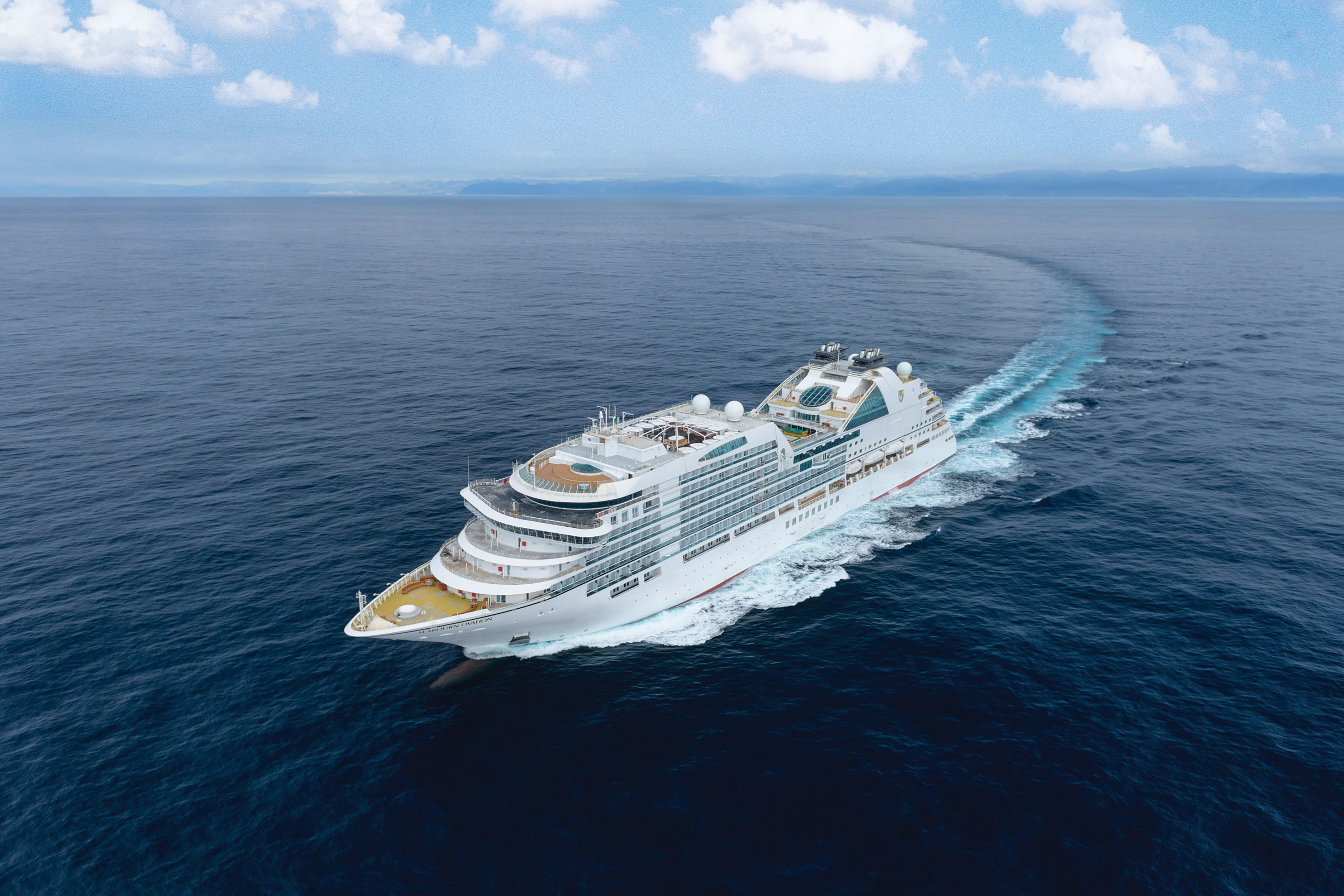
Seabourn currently operates six ultra‑luxury ships. The classic ocean vessels — Seabourn Ovation and Seabourn Encore (each ~40,350 GT), as well as Seabourn Quest and Seabourn Sojourn (each ~32,300 GT) — carry approximately 450–600 guests apiece. The two newest additions, Seabourn Venture (2022) and Seabourn Pursuit (2023), are purpose‑built expedition ships of about 23,000 GT, each carrying around 264 guests. These expedition vessels feature two six-person submarines, a fleet of Zodiacs, and an open bridge policy.
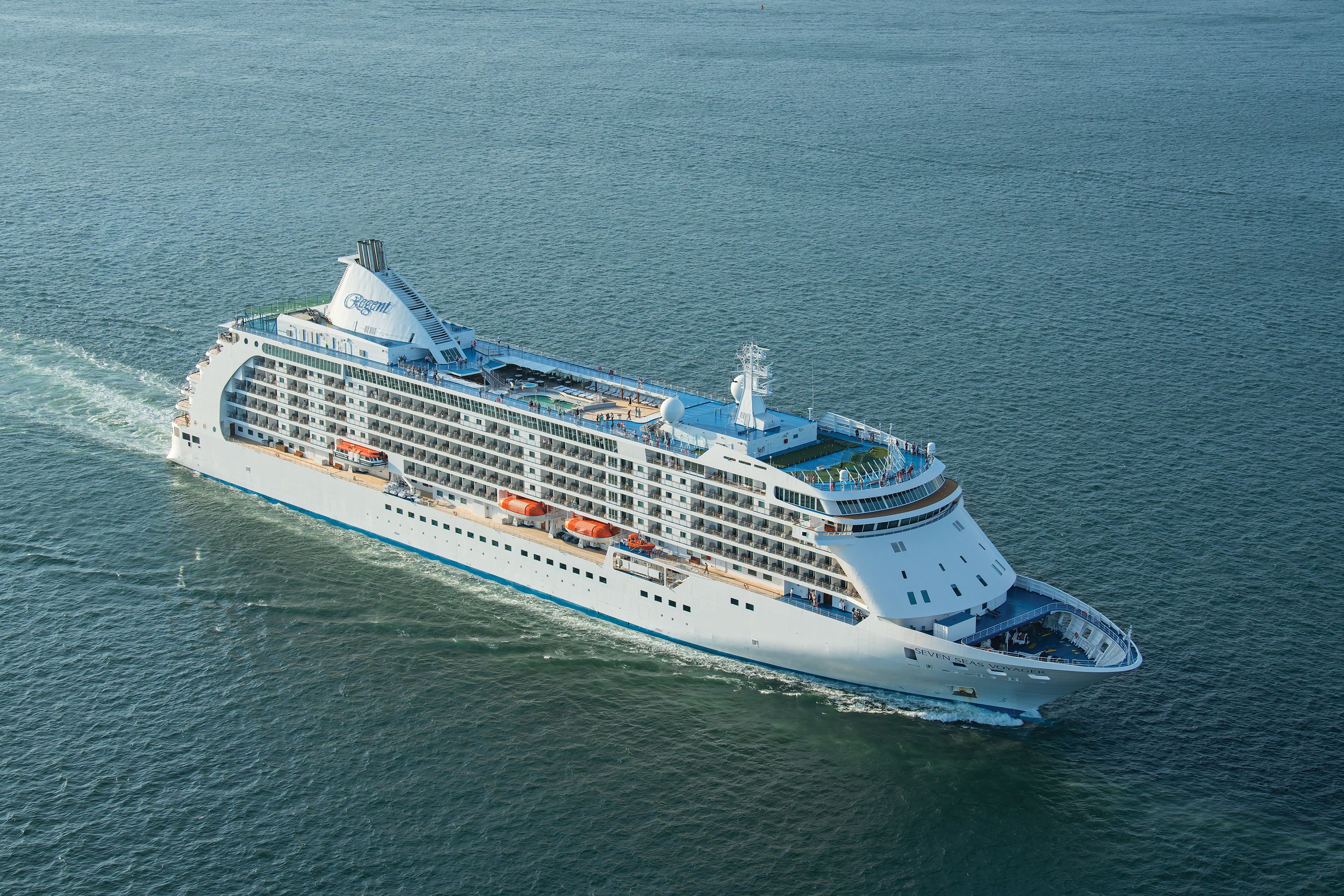
Regent Seven Seas currently operates six active ships, with a seventh — Seven Seas Prestige — scheduled to join the fleet in December 2026. The flagship Seven Seas Splendor (2020) and the newest Seven Seas Grandeur (2023) are each approximately 55,000 GRT and carry around 750 guests. The older Seven Seas Navigator (1999) is the smallest and most dated vessel at roughly 28,550 GRT. Seven Seas Mariner, Seven Seas Voyager, and Seven Seas Explorer round out the middle of the fleet.
| Feature | Seabourn (Classic) | Seabourn (Expedition) | Regent Seven Seas |
|---|---|---|---|
| Ships | Ovation, Encore, Sojourn, Quest | Venture, Pursuit | Splendor, Grandeur, Explorer, Mariner, Voyager, Navigator (Prestige joining 2026) |
| Passenger Capacity | ~450–600 | ~264 | ~490–750 |
| Ship Size (GRT) | ~32,300–40,350 | ~23,000 | ~28,800–56,200 |
| Crew-to-Guest Ratio | ~1:1.3 | ~1:1 | ~1:1.4 |
| Expedition Capability | None | Full (submarines, Zodiacs) | None |
Pro Tip: If you're considering Regent, prioritize Seven Seas Splendor or Seven Seas Grandeur over the older vessels. The older ships, particularly Seven Seas Navigator, haven't received the same level of refurbishment and the product gap is noticeable.
What's Included: The All-Inclusive Breakdown
This is where the two lines diverge most sharply — and where misunderstanding the difference can cost thousands of dollars.
Regent Seven Seas is widely regarded as offering one of the most comprehensive all-inclusive models in luxury cruising. Every fare includes:
- All dining across all venues (no specialty restaurant surcharges)
- Unlimited premium beverages, including wines and spirits
- Complimentary shore excursions (subject to availability)
- Roundtrip airfare on many sailings, with options to upgrade to business class depending on itinerary and availability
- Pre-cruise hotel stay (on select itineraries)
- Gratuities
- Wi-Fi
Seabourn includes a strong but narrower package:
- All dining (including specialty restaurants)
- Premium spirits, wines, and champagne
- Gratuities
- Wi-Fi
- Select in-suite minibar stocked daily
What Seabourn does not include by default: shore excursions and airfare. Excursions are sold à la carte, and costs can add up quickly — particularly on longer itineraries with multiple ports.
| Inclusion | Seabourn | Regent Seven Seas |
|---|---|---|
| All dining & specialty restaurants | ✅ | ✅ |
| Premium beverages | ✅ | ✅ |
| Gratuities | ✅ | ✅ |
| Wi-Fi | ✅ | ✅ |
| Shore excursions | ❌ (à la carte) | ✅ (unlimited, 1/port/day) |
| Business class airfare | ❌ | ✅ (8+ nights, select gateways) |
| Pre-cruise hotel | ❌ | ✅ (select sailings) |
For a 10-night itinerary with six port days, Regent's included excursions alone can represent $1,200–$2,400+ per person in value, depending on the destination. That context matters enormously when comparing sticker prices.
Pro Tip: Regent's unlimited excursion benefit is genuinely valuable in destinations like Japan, the Middle East, or South America, where quality guided tours routinely cost $150–$300 per person. In Caribbean ports where you might prefer beach time, the value is lower.
Dining Experience Comparison
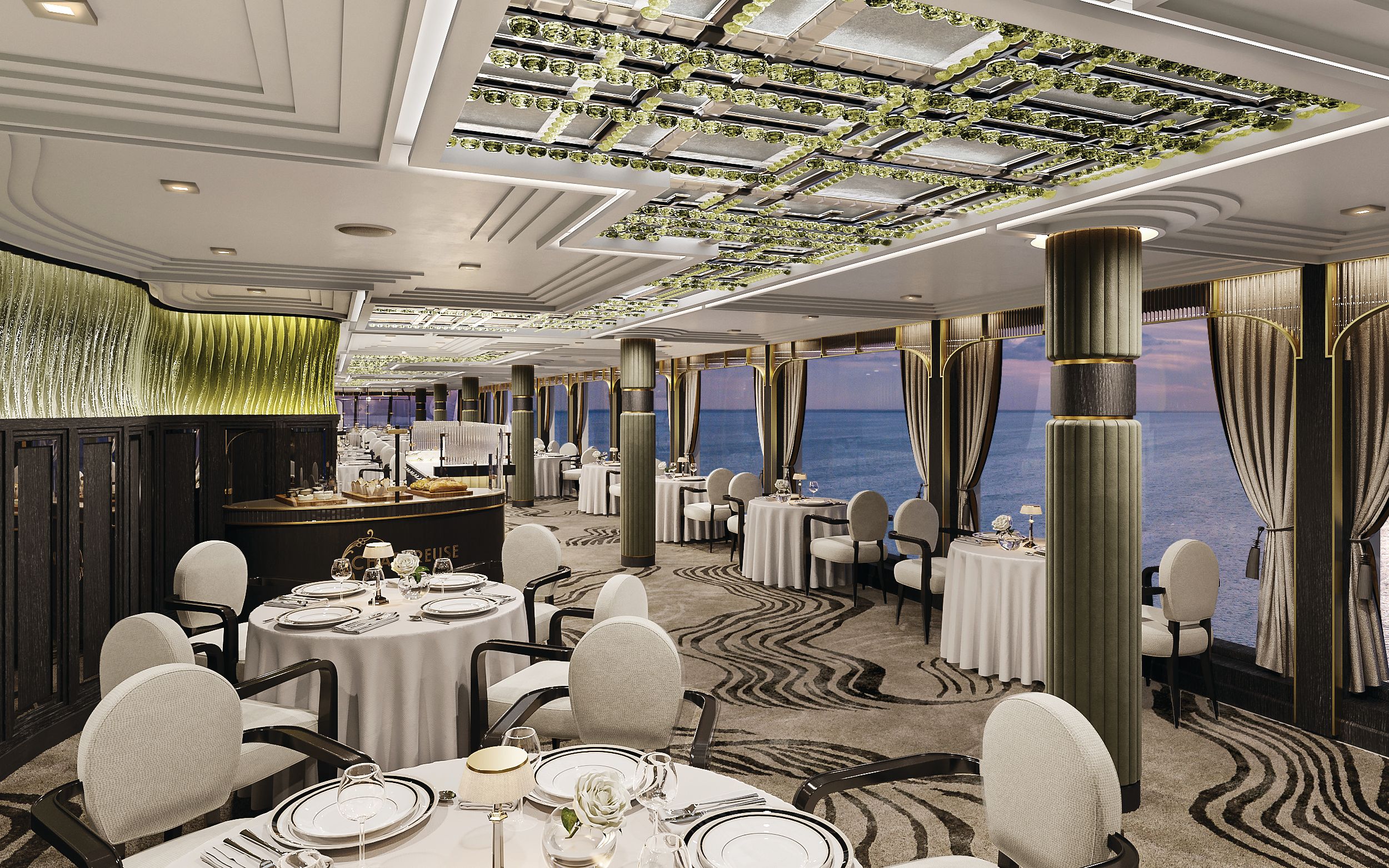
Both lines offer all-included dining across multiple venues, but the approach and atmosphere differ.
Seabourn's dining philosophy centers on intimacy and flexibility. The main dining room, called The Restaurant, offers open seating for all meals with no fixed times or assigned tables. Specialty venues vary by ship but typically include The Colonnade (indoor/outdoor casual), The Patio Grill (poolside), and Earth & Ocean (alfresco). On the classic ships, The Grill by Thomas Keller — a collaboration with the Michelin-starred chef — is a standout reservation, serving American chophouse classics in an elegant setting.
Regent Seven Seas operates a broader portfolio of specialty restaurants. On Seven Seas Splendor and Grandeur, guests can choose from Pacific Rim (Pan-Asian), Chartreuse (French), Prime 7 (steakhouse), Compass Rose (the main dining room), and the casual Sette Mari at La Veranda. Compass Rose itself is one of the largest main dining rooms in luxury cruising, capable of seating all guests in a single seating — a notable operational feature.
| Dining Factor | Seabourn | Regent Seven Seas |
|---|---|---|
| Main dining room style | Intimate, open seating | Grand, single-seating capable |
| Specialty restaurants | 2–3 per ship | 4–5 per ship (newer vessels) |
| Celebrity chef collaboration | Thomas Keller (The Grill) | None currently |
| Reservation required | Yes (specialty) | Yes (specialty) |
| Surcharges | None | None |
The Thomas Keller partnership gives Seabourn a culinary prestige edge that resonates with food-focused travelers. Regent counters with sheer variety — particularly on its newer ships.
Cabin and Suite Comparison
Both lines are all-suite or near-all-suite products, but the definitions and square footage differ.

Seabourn's classic ships offer suites ranging from approximately 295 sq ft (Oceanview Suite) to 1,135 sq ft (Grand Wintergarden Suite). The entry-level Veranda Suite at roughly 300 sq ft is comfortable but not extravagant by ultra-luxury standards. All suites include a marble bathroom, walk-in closet, and a stocked minibar. The expedition ships feature slightly larger entry-level suites at around 355 sq ft.
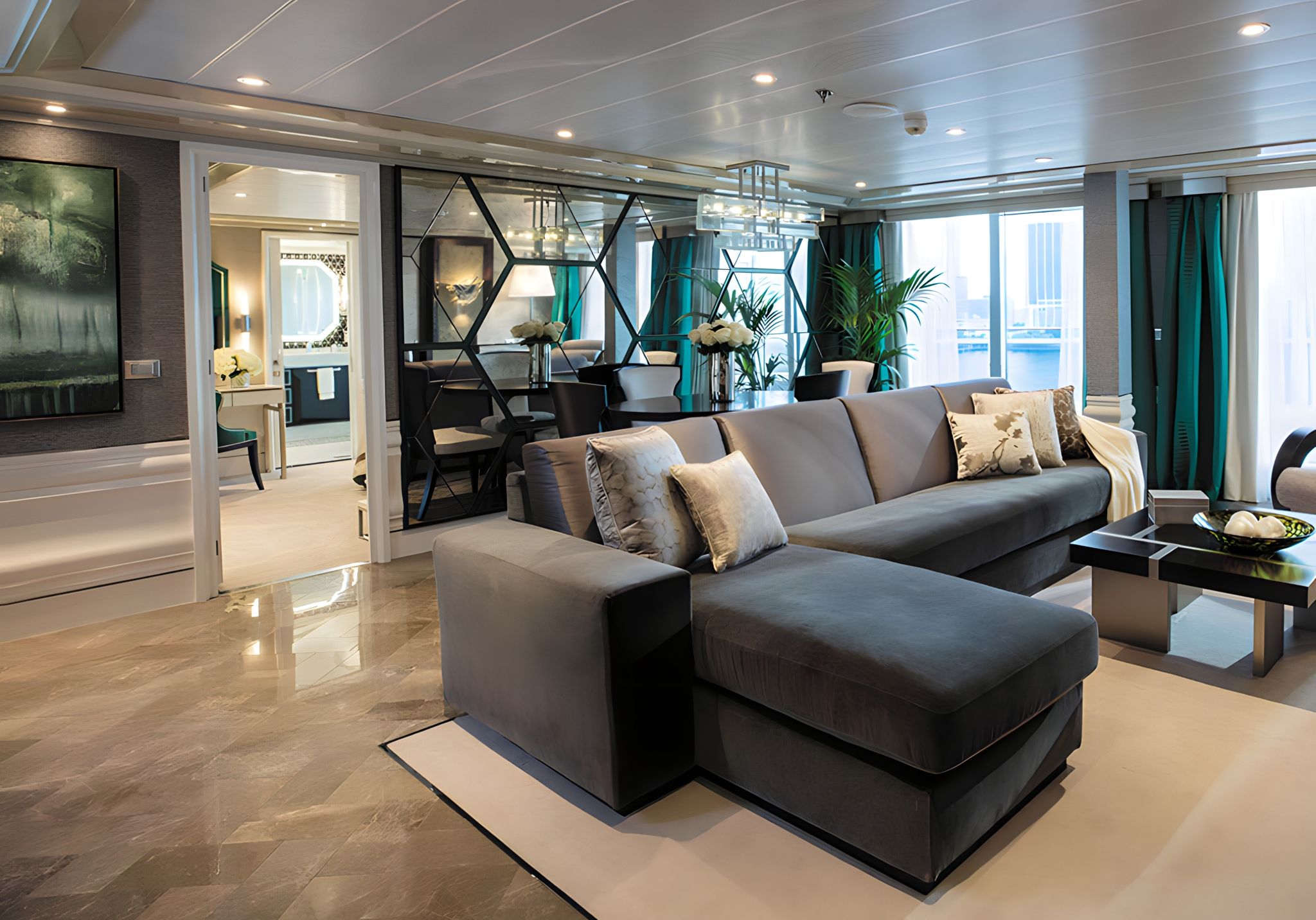
Regent Seven Seas offers spacious accommodations across its fleet. Entry-level Deluxe Veranda Suites on Seven Seas Grandeur start at approximately 307 sq ft, with Concierge Suites at 398 sq ft and the Penthouse Suite at 786 sq ft. Regent’s entry-level and mid-tier suites often provide more square footage per guest than comparable Seabourn categories, contributing to a more spacious onboard experience.
| Suite Category | Seabourn (Classic) | Regent Seven Seas |
|---|---|---|
| Entry-level suite | ~295 sq ft (Oceanview) | ~307 sq ft (Deluxe Veranda) |
| Mid-tier suite | ~436 sq ft (Penthouse) | ~398–534 sq ft (Concierge/Penthouse) |
| Top suite | ~1,135 sq ft (Grand Wintergarden) | ~4,443 sq ft (The Regent Suite) |
| All suites have balconies? | No (Oceanview is windowless) | Yes (all suites) |
| Butler service | Penthouse and above | Penthouse and above |
Pro Tip: On Regent, booking a Concierge Suite or above unlocks guaranteed specialty restaurant reservations before embarkation — a meaningful perk on popular sailings where Prime 7 and Pacific Rim fill up fast.
For guests who prioritize suite square footage and guaranteed balconies at every category, Regent holds the structural advantage. Seabourn's suites are elegant but more compact at entry level.
Destinations and Itineraries

Seabourn covers approximately 400+ destinations across all seven continents. The classic ships are particularly strong in the Mediterranean, Northern Europe, Caribbean, and Asia. The expedition ships, Venture and Pursuit, have opened up a genuinely different category of travel: Antarctica with Zodiac landings, Arctic expeditions, the Amazon River, and remote Pacific island chains. No other ultra-luxury line offers submarine excursions as a standard onboard feature.
Regent Seven Seas covers 500+ ports across all seven continents. The line is known for its Grand Voyages — extended itineraries of 60–100+ nights that circumnavigate the globe or traverse entire ocean regions. A recent 61-night "Indian Ocean Odyssey" sailed from Cape Town to Barcelona, calling at more than 25 ports including Madagascar, Oman, and Saudi Arabia. Regent does not operate expedition ships, so remote wilderness destinations like Antarctica are not part of its portfolio.
For Japan itineraries specifically — a popular comparison point on travel forums — both lines operate compelling sailings. Regent's longer Japan voyages tend to include more overnight stays in major cities, while Seabourn's smaller ships can access smaller ports that larger vessels cannot. If you're interested in a Japan cruise, our guide to best Japan cruises for every type of traveler covers the full spectrum of options.
Pro Tip: Seabourn's smaller draft on expedition ships allows access to ports like Kangerlussuaq in Greenland or remote Antarctic landing sites that are physically inaccessible to Regent's fleet. If expedition travel is even a possibility for you, Seabourn's portfolio is uniquely positioned.
Pricing and Value Analysis
Both lines sit at the top of the cruise pricing spectrum, but the all-in cost calculation is more nuanced than the headline fare.
Seabourn fares for classic ships typically start from around $500–$700 per person per day for entry-level suites on shorter Mediterranean or Caribbean sailings. Grand Voyages and expedition sailings command significantly higher rates — Seabourn's 75-day Australia-to-Tokyo sailing, for example, starts well above $40,000 per person. Expedition ship fares on Venture and Pursuit often run higher per night than the classic fleet.
Regent Seven Seas fares for entry-level Deluxe Veranda Suites typically start from $500–$800 per person per day on standard itineraries. Grand Voyages start from approximately $39,000+ per person for 60+ night sailings. However, because Regent's fare includes business class airfare, unlimited excursions, and pre-cruise hotels, the true out-of-pocket comparison often favors Regent for guests who would otherwise purchase those add-ons.
A practical example: On a 10-night Mediterranean sailing, a Seabourn fare might appear $200/night cheaper per person. But add six shore excursions at $150/person each ($900), plus roundtrip business class airfare ($3,000–$5,000/person), and Regent's higher headline fare can represent equal or better total value.
Pro Tip: When comparing fares on our platform, always toggle to "total cost" view and add estimated excursion spend to Seabourn's price before making a final comparison. The per-night fare is rarely the whole story at this price point.
Who Should Choose Seabourn

Seabourn is the stronger choice for travelers who:
- Prioritize intimacy over scale. With 264–450 guests, Seabourn's ships feel genuinely like private yachts. You will know your fellow passengers by name by day three.
- Want expedition access. Seabourn Venture and Pursuit are among the most capable expedition vessels in luxury cruising. If Antarctica, the Arctic, or the Amazon is on your list, Seabourn is the only ultra-luxury option with submarines and a dedicated science program.
- Are food-driven travelers. The Thomas Keller partnership elevates the culinary experience in a way that has no direct Regent equivalent.
- Prefer a curated, flexible shore experience. Guests who prefer to self-guide in ports, hire private guides, or simply wander won't be paying for bundled excursions they don't use.
- Value a quieter, less formal atmosphere. Seabourn's dress code is "elegant casual" and the vibe onboard leans relaxed rather than grand.
Who Should Choose Regent Seven Seas
Regent Seven Seas is the stronger choice for travelers who:
- Want true all-inclusive simplicity. Regent's fare model eliminates virtually all onboard and excursion decision-making. You pay once and experience fully.
- Prioritize suite space. Regent's newer ships offer more square footage at entry level and dramatically larger top-tier suites.
- Take shore excursions at every port. The unlimited excursion benefit is the single most financially impactful inclusion in luxury cruising when used consistently.
- Value business class air. For international itineraries departing from the US, the included roundtrip business class airfare on sailings of 8+ nights is a substantial inclusion.
- Want a grand, hotel-like onboard experience. Seven Seas Grandeur and Splendor have the scale, décor, and amenity depth of a five-star resort hotel at sea.
- Are considering a Grand Voyage. Regent's 60–100+ night itineraries represent some of the most comprehensive world cruising available in the luxury segment.
For couples considering luxury options for a honeymoon or milestone anniversary, our best honeymoon cruises guide covers how both lines compare against other romantic options.
Final Verdict
There is no objectively superior line — but there is a right answer for your specific travel profile.
Choose Seabourn if you want the most intimate luxury experience afloat, plan to explore expedition destinations, or value the Thomas Keller dining program over a larger suite and bundled excursions.
Choose Regent Seven Seas if you want the most comprehensive all-inclusive value in ultra-luxury cruising, prefer larger suites, plan to take excursions at every port, and want business class airfare handled in a single transaction.
For most first-time ultra-luxury cruisers — particularly those coming from premium lines like Celebrity or Oceania — Regent's all-inclusive model is easier to budget, easier to plan around, and delivers a more immediately recognizable "luxury resort" experience. For experienced luxury travelers who have done the Mediterranean and Caribbean circuits and want something more adventurous or intimate, Seabourn's expedition ships and smaller classic vessels offer something genuinely distinct.
Our platform shows strong booking demand for both lines on Japan itineraries, Mediterranean Grand Voyages, and Antarctic expeditions. If you're comparing specific sailings, looking at the total cost including excursions and airfare will almost always clarify the decision.
Key Takeaways
- Regent Seven Seas offers the most comprehensive all-inclusive model in ultra-luxury cruising, including unlimited shore excursions and business class airfare on qualifying sailings.
- Seabourn delivers a more intimate experience with 264–450 guests per ship, and is the only ultra-luxury line with purpose-built expedition ships featuring submarines.
- Suite size favors Regent at every category, with entry-level balcony suites starting larger and top suites reaching 4,443 sq ft on Seven Seas Explorer.
- Dining gives Seabourn an edge through the Thomas Keller partnership; Regent counters with more specialty restaurant variety on newer ships.
- Total cost — not headline fare — is the correct comparison metric. Regent's inclusions frequently close or reverse an apparent price gap once excursions and airfare are added to Seabourn's fare.
Frequently Asked Questions
Q: Is Seabourn or Regent Seven Seas more expensive?
Headline fares are broadly comparable, with both lines starting from roughly $500–$800 per person per day for entry-level suites. However, Regent's fare includes unlimited shore excursions, business class airfare on qualifying sailings, and pre-cruise hotels — inclusions that can add $3,000–$8,000+ per person to Seabourn's true out-of-pocket cost on a typical 10–14 night itinerary.
Q: Does Regent Seven Seas really include all shore excursions?
Regent includes one complimentary shore excursion per port per day, with no cap on total excursions across the voyage. Some premium excursions (private touring, small-group specialist experiences) carry an additional cost, but the standard excursion catalog is fully included in the fare.
Q: Which line is better for Antarctica?
Seabourn is the clear choice for Antarctic expedition travel. Seabourn Venture and Seabourn Pursuit are purpose-built for polar regions, equipped with two six-person submarines, Zodiac landing craft, and a team of onboard naturalists and scientists. Regent Seven Seas does not operate expedition ships and does not offer Antarctic itineraries.
Q: Are Seabourn and Regent Seven Seas good for first-time luxury cruisers?
Both lines are accessible to first-time luxury cruisers, but Regent's all-inclusive model tends to be easier to plan around and delivers a more immediately recognizable luxury resort experience. Seabourn's smaller ships and more curated atmosphere reward guests who prefer a quieter, less programmatic voyage.
Q: Which line has better food?
Both lines are excellent, but they differ in approach. Seabourn's collaboration with Thomas Keller (The Grill by Thomas Keller) is a genuine culinary distinction. Regent Seven Seas offers more specialty restaurant variety on its newer ships — up to five venues — but lacks a comparable celebrity chef partnership. Food-focused travelers tend to give Seabourn the edge for culinary prestige.
Q: How far in advance should I book either line?
Popular sailings on both lines — particularly Mediterranean summer voyages, Japan itineraries, and Antarctic expeditions — can sell out 12–18 months in advance. Regent's Grand Voyages frequently sell out within weeks of opening. For the best suite selection and pricing, booking 12+ months out is standard practice at this tier.
Fast Facts
- Best For: Discerning travelers seeking the pinnacle of ocean cruising; couples, retirees, and experienced cruisers
- Price Range: Fares typically start from $500–$800 per person per day; Grand Voyages from $39,000+ per person
- Best Time to Book: 12–18 months in advance for peak sailings; Grand Voyages often sell out within weeks of opening
- Top Pick for Intimacy: Seabourn (Seabourn Venture or Seabourn Pursuit for expedition; Seabourn Odyssey for classic)
- Top Pick for All-Inclusive Value: Regent Seven Seas (Seven Seas Grandeur or Seven Seas Splendor)
- Expedition Capability: Seabourn only
- Best All-Inclusive Model: Regent Seven Seas (unlimited excursions + business class air)
- Key Differentiator: Seabourn = intimate scale + expedition access; Regent = comprehensive inclusions + suite space


