Disney Wish vs. Disney Treasure: Which Ship to Book in 2026
Disney Wish and Disney Treasure are sister ships in Disney Cruise Line's Wish class, sharing the same 144,000-gross-ton hull and nearly identical layouts — but they deliver meaningfully different onboard experiences. Disney Wish launched in 2022 with a Cinderella-inspired ‘castle at sea’ theme and shorter 3- and 4-night Caribbean itineraries, while Disney Treasure launched in December 2024 with an Aladdin-inspired adventure aesthetic and longer 7-night sailings. For most families planning a 2026 cruise, the right choice comes down to trip length, thematic preference, and which story-driven rotational dining venue appeals more to your family.
Disney Wish vs. Disney Treasure: The Core Differences at a Glance
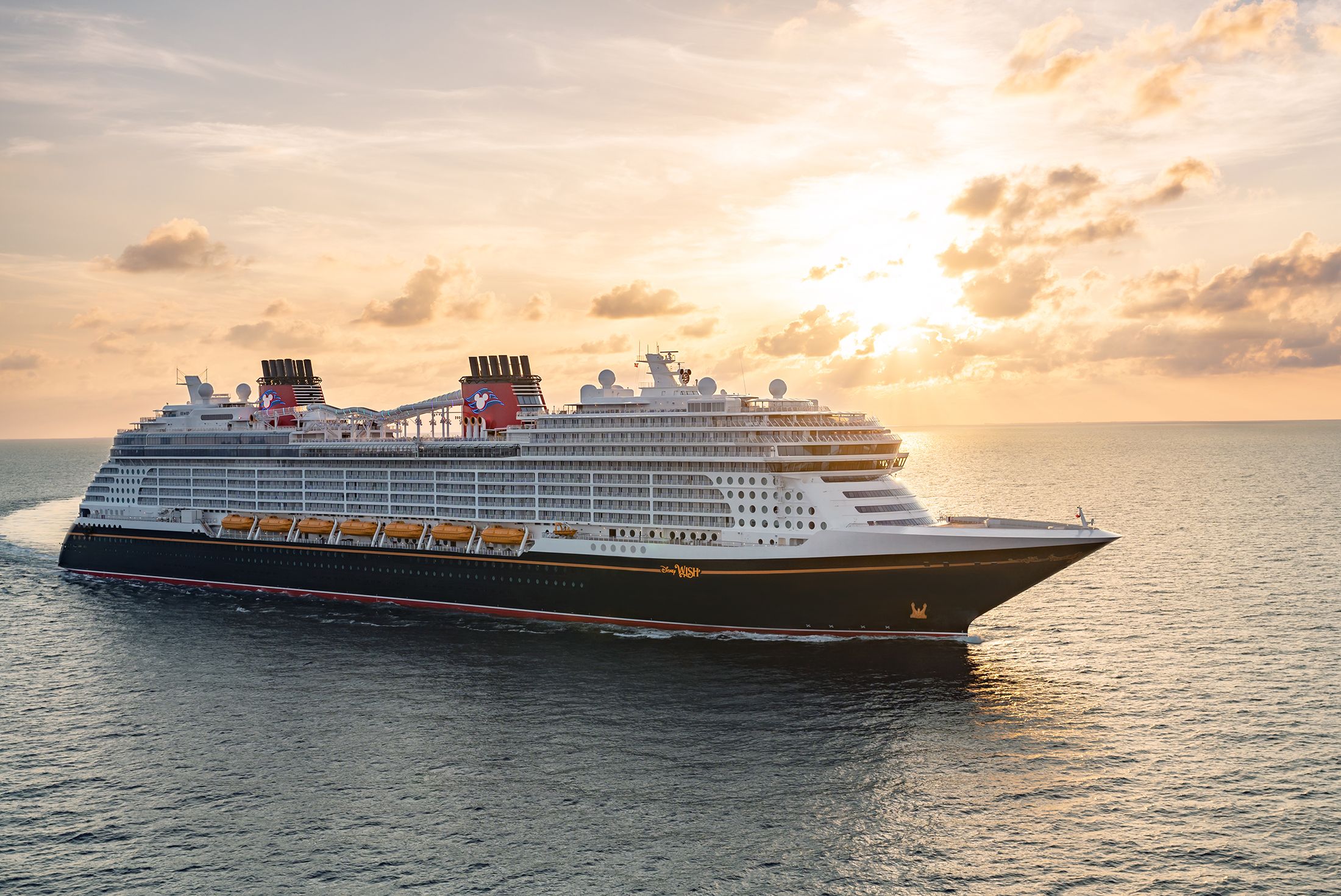
Disney Wish and Disney Treasure are sister ships in Disney Cruise Line's Wish class, sharing nearly identical layouts, stateroom categories, and many of the same onboard venues. Rather than physical differences, the biggest distinctions lie in their theming, itineraries, and exclusive entertainment and dining experiences.
Disney Wish embraces a classic fairytale atmosphere inspired by Disney's timeless stories. Its Grand Hall features a bronze Cinderella statue beneath elegant blue-and-gold décor, creating an enchanting introduction to the ship. Throughout the vessel, venues such as The Bayou, Star Wars: Hyperspace Lounge, and Arendelle: A Frozen Dining Adventure celebrate some of Disney's most beloved films and characters.
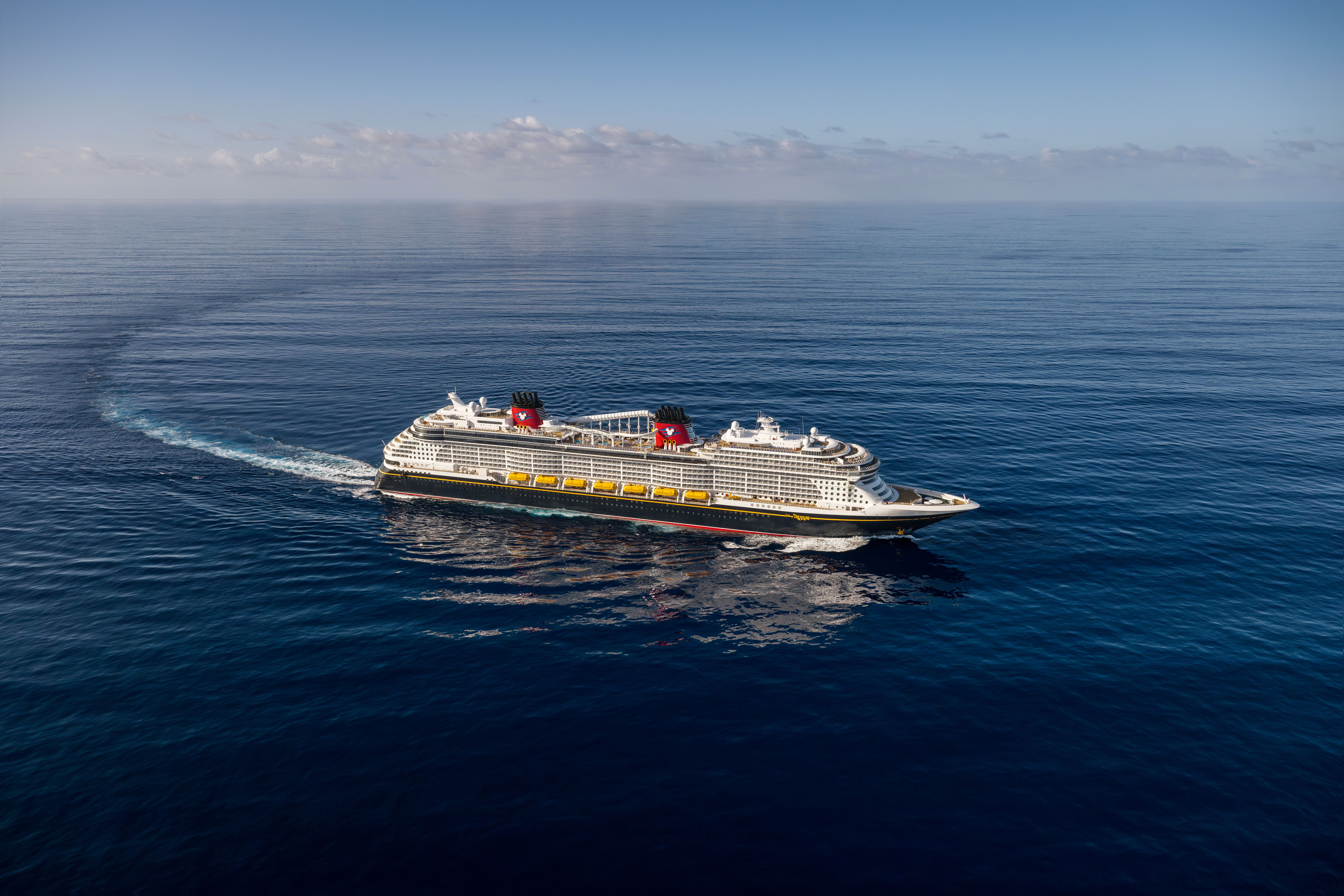
Disney Treasure takes a more unified adventure-inspired approach. The Grand Hall is themed around Aladdin, featuring rich jewel tones, Moroccan-inspired architectural details, and a central statue of Aladdin, Jasmine, and the Magic Carpet. Across the ship, lounges, restaurants, and public spaces continue the exploration theme with venues such as Skipper Society, Haunted Mansion Parlor, Periscope Pub, and Plaza de Coco.
Porthole Cruise and Travel praised Disney Treasure’s design as “one of the most beautiful cruise ship interiors” it had seen, specifically highlighting the royal blues, mustard yellows, deep purples, and peacock greens used throughout the ship. That stronger visual identity is a meaningful distinction for guests who care about immersion.
Pro Tip: If thematic cohesion matters to your family, Disney Treasure's adventure-through-the-world concept creates a more unified experience from Grand Hall to adult lounge to kids' club. Disney Wish is still visually stunning — it just draws from a wider Disney palette.
Ship Size and Itineraries: Where Each Ship Sails in 2026
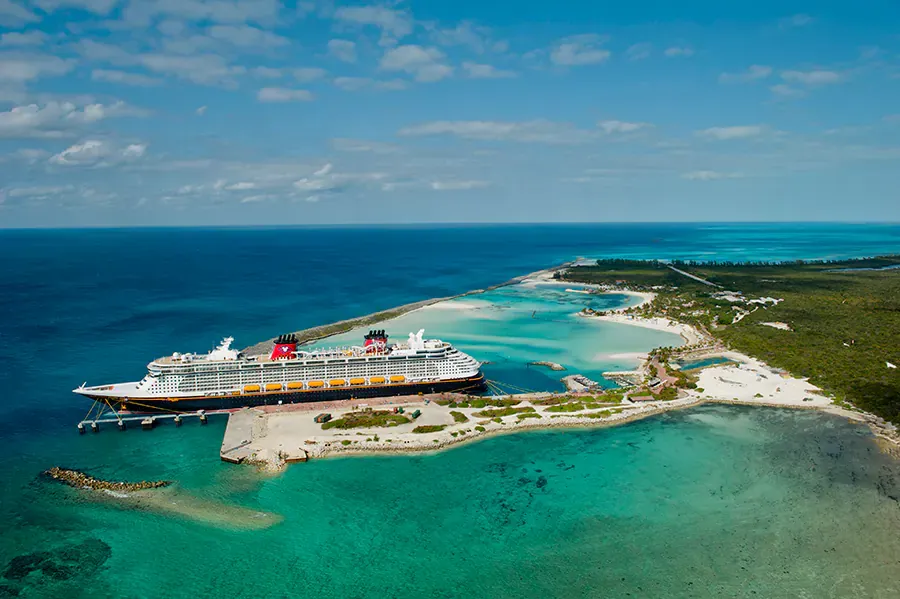
Both Wish-class ships measure approximately 144,000 gross tons and carry around 4,000 guests. The itinerary split is where the two ships diverge most practically.
Disney Wish typically operates 3- and 4-night Bahamas itineraries from Port Canaveral, Florida. Ports often include Nassau and Castaway Cay, Disney’s private island, with some sailings also visiting Lookout Cay at Lighthouse Point, Disney’s newer private destination on Eleuthera in the Bahamas. These shorter sailings make Wish the more practical choice for families pairing a Disney cruise with a Walt Disney World trip or working with tighter vacation windows.
Disney Treasure typically runs 7-night Caribbean itineraries from Port Canaveral, with Eastern and Western Caribbean rotations. Port lineups may include Disney’s private island destinations alongside Eastern Caribbean ports such as San Juan, Puerto Rico; Tortola; and St. Thomas, or Western Caribbean ports such as Cozumel, Belize, and Grand Cayman.
| Feature | Disney Wish | Disney Treasure |
|---|---|---|
| Debut | 2022 | December 2024 |
| Theme | Cinderella / Disney Princess | Aladdin / Adventure |
| Gross Tonnage | ~144,000 GT | ~144,000 GT |
| Guest Capacity | ~4,000 | ~4,000 |
| Home Port | Port Canaveral, FL | Port Canaveral, FL |
| Typical Itinerary | 3–4 nights | 7 nights |
| Primary Ports | Nassau, Castaway Cay, Lookout Cay | Eastern & Western Caribbean |
| Story-driven rotational dining | Arendelle: A Frozen Dining Adventure | Plaza de Coco |
| Grand Hall Theme | Cinderella | Aladdin |
Cabin Categories Compared

Because Disney Wish and Disney Treasure share the same Wish-class hull, their cabin categories are structurally identical. Both ships offer:
- Interior staterooms — the entry-level inside cabins, with no exterior window
- Oceanview staterooms — traditional porthole or picture window views
- Verandah staterooms — private balconies, the most popular category for families
- Concierge staterooms and suites — including 1- and 2-bedroom suites with concierge lounge access, priority boarding, and dedicated dining reservations assistance
- The Wish Tower Suite / Treasure Tower Suite — the flagship two-story funnel suite on each ship, offering a dramatic, storybook-style design, sweeping ocean views, and a more private residential feel than standard concierge suites
The key practical difference: because Disney Treasure sails 7-night itineraries, the per-night cabin cost can appear lower than Wish on a like-for-like basis, but the total voyage investment is significantly higher. Families doing a 3-night Wish sailing as a WDW add-on will find it more accessible from a total budget standpoint.
Pro Tip: On both ships, Concierge-level guests get access to a dedicated sun deck and lounge that's genuinely adults-friendly during sea days. If you're traveling without young children, this is one of the better-value upgrades in the Disney fleet. For more on choosing the right cabin category, see our guide on how to choose a room on a cruise ship.
Dining Comparison: Rotational Dining and Signature Restaurants

Disney Cruise Line's rotational dining system — where your family rotates through three main dining rooms across the voyage — anchors the food experience on both ships. The main dining rooms differ by theme and menu, but the format is the same: your servers travel with you, and the rooms are designed around specific Disney stories.
The signature dining differentiator on each ship is its story-driven rotational restaurant: Arendelle: A Frozen Dining Adventure on Disney Wish and Plaza de Coco on Disney Treasure. Both are part of Disney Cruise Line’s included rotational dining program, rather than separate upcharge restaurants.
Disney Wish: Arendelle: A Frozen Dining Adventure seats guests in a Frozen-themed dining room where Anna, Elsa, Olaf, Sven, and Oaken appear throughout the meal. Singing is encouraged, the energy is high, and the menu leans Scandinavian-inspired — smoked salmon, braised meatballs, and similar hearty fare. This is the most family-centric of the two immersive experiences.
Disney Treasure: Plaza de Coco is inspired by the film Coco and set in a vibrant Mexican plaza during Día de los Muertos. The experience features live music, appearances by Miguel and other characters, and Mexican-influenced cuisine. Multiple reviewers have noted that Plaza de Coco edges out Arendelle in terms of emotional resonance and menu quality — the food program is more sophisticated and the storytelling more layered.
Both ships also feature Palo Steakhouse, an adults-only specialty restaurant with an additional charge, as well as 1923 and Worlds of Marvel as part of the rotational dining lineup.
| Dining category | Disney Wish | Disney Treasure |
|---|---|---|
| Story-driven rotational dining | Arendelle: A Frozen Dining Adventure | Plaza de Coco |
| Shared rotational dining | Worlds of Marvel; 1923 | Worlds of Marvel; 1923 |
| Adult-exclusive upcharge | Palo Steakhouse; Enchanté | Palo Steakhouse; Enchanté |
| Main buffet/casual dining | Marceline Market and pool-deck options | Marceline Market and pool-deck options |
Pro Tip: Arendelle and Plaza de Coco are included rotational dining venues, so they do not require separate reservations. Use your advance booking window for Palo Steakhouse, Enchanté, Port Adventures, spa appointments, beverage tastings, and select character experiences instead.
Kids and Family Entertainment: Clubs, Shows, and Splash Zones
Both ships run Disney's signature youth club programming through the Oceaneer Club, with age-segmented spaces for different groups. On Wish-class ships, the Oceaneer Club includes themed labs and activity rooms tied to specific Disney franchises — Star Wars, Marvel, and Disney Princess content all feature prominently.
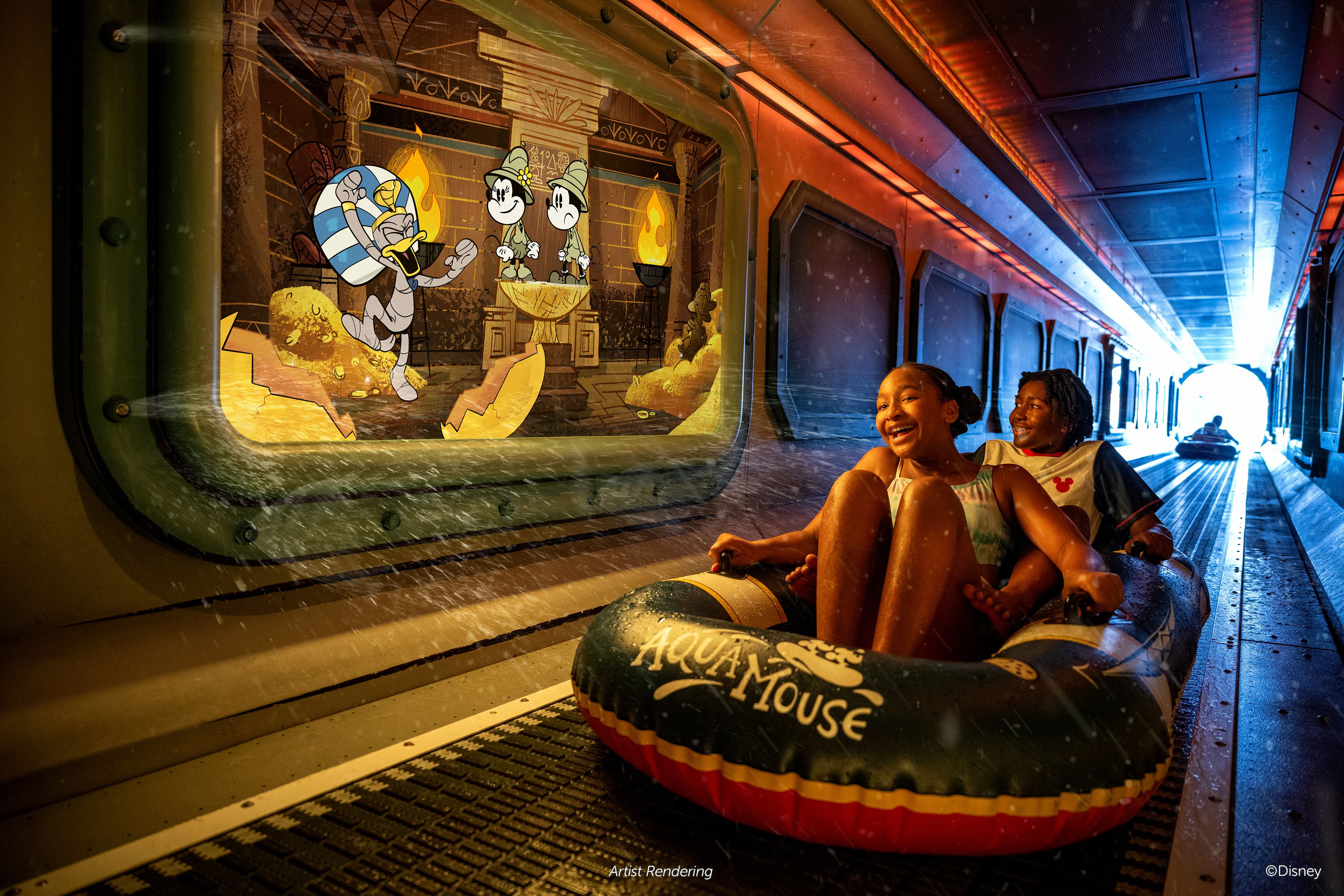
AquaMouse — Disney's first-ever ship-based attraction — debuted on Disney Wish and carries over to Disney Treasure in the same format. It's a water tube ride that wraps around the upper decks with Disney storytelling integrated into the experience. Both ships have it, so this is not a differentiator.
Where the ships differ is in their stage show programming. Disney Wish features Disney The Little Mermaid, Disney Seas the Adventure, and Disney’s Aladdin — A Musical Spectacular. Disney Treasure’s standout exclusive production is Disney The Tale of Moana, while Disney Seas the Adventure also appears on Treasure.
The Uncharted Adventure interactive game (a choose-your-own-adventure experience using the Disney Cruise Line app) is available on both ships, though Disney Treasure's version incorporates its adventure theme more naturally into the narrative.
For families traveling with young children, both ships are equally strong. The Wish-class Oceaneer Club layout is the same on both vessels. Disney Treasure's edge is in the overall thematic consistency — the adventure-through-the-world concept gives kids a sense of narrative journey that Wish's broader Disney brand approach doesn't quite replicate.
Pro Tip: The Oceaneer Club on both ships is complimentary and open-drop for ages 3–12 during designated hours. Teens (ages 13–17) get their own space (Edge and Vibe, respectively), which is separate from the younger kids' areas.
Adult Spaces and Nightlife: How Each Ship Handles Grown-Up Time
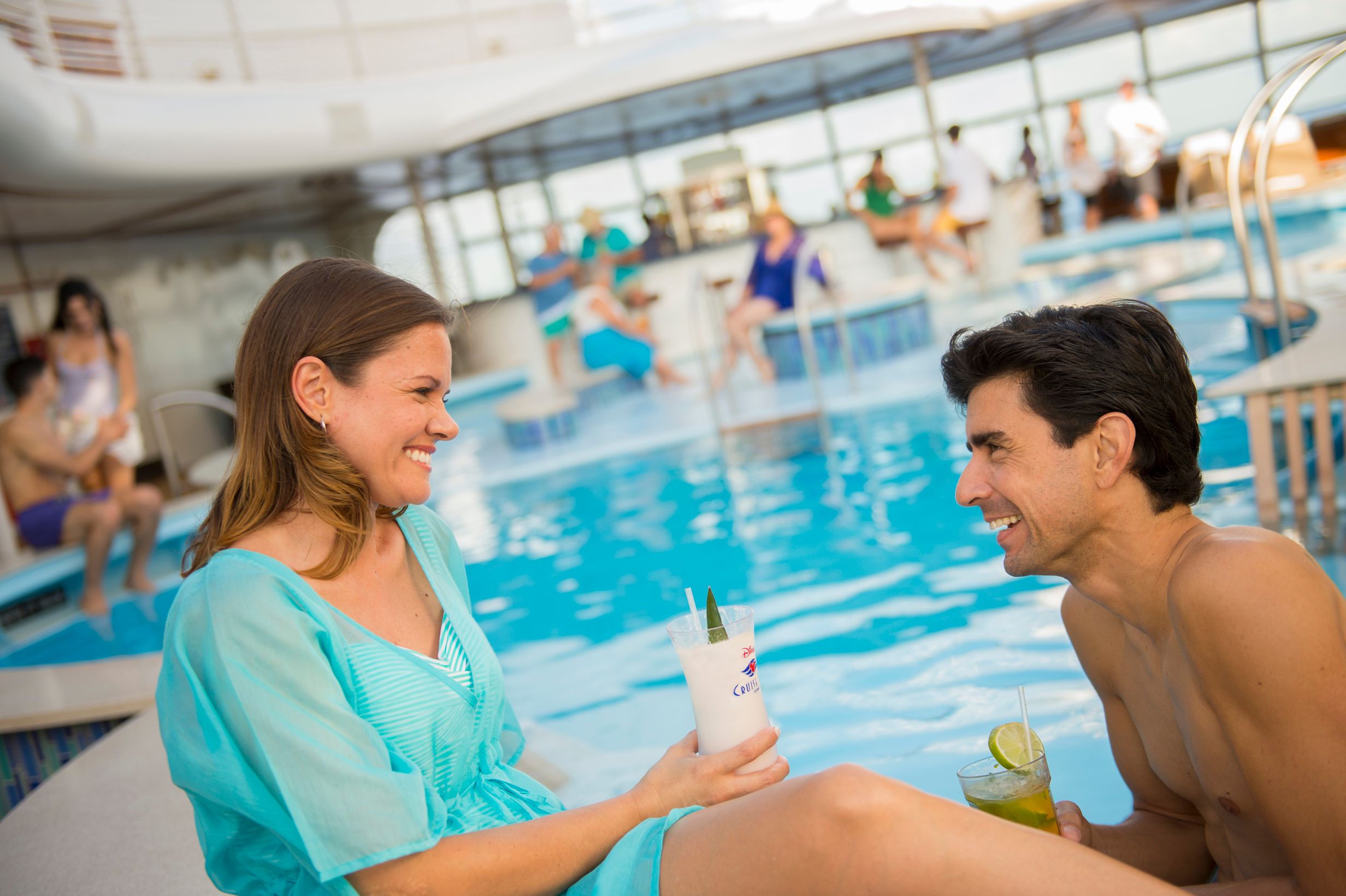
One of the most significant improvements in the Wish-class design over older Disney ships (Dream, Fantasy, Magic, Wonder) is that the adult areas are physically separated from the rest of the ship — not just roped off. On Disney Dream and Fantasy, adults-only spaces are technically accessible to younger guests who wander through. On Wish and Treasure, the adult areas feel more clearly defined and separated from family-heavy spaces.
Disney Wish adult spaces include:
- Nightingale's — a piano bar with an Art Deco aesthetic
- The Rose — a champagne and cocktail bar with a floral theme
- Keg & Compass — a nautical-themed pub
- Quiet Cove — the adults-only pool deck
Disney Treasure adult spaces include:
- Skipper Society — a Jungle Cruise-inspired lounge with richly detailed adventure theming
- Haunted Mansion Parlor — a cocktail lounge inspired by the classic Disney Parks attraction
- Periscope Pub — a nautical pub inspired by 20,000 Leagues Under the Sea
- Scat Cat Lounge — an adults-only piano lounge inspired by The Aristocats
Disney Treasure’s adult bar lineup is broadly more varied and adventure-driven than Wish’s. Skipper Society draws consistent praise for its richly detailed Jungle Cruise-inspired theming, while Haunted Mansion Parlor and Periscope Pub add strong Disney Parks and adventure references. Scat Cat Lounge also gives Treasure a live-music dimension, rounding out a more distinctive nightlife lineup.
For adults sailing without children — or couples looking for evening spaces after the kids are in the club — Disney Treasure offers a richer nightlife ecosystem. Our guide to Disney Cruise Line for adults without kids covers what to expect from DCL's adult programming more broadly.
Price and Value Analysis

Because Disney Wish and Disney Treasure operate different itinerary lengths, direct price comparisons require some adjustment. Disney Cruise Line pricing is generally premium across the board — both ships carry a significant price premium over comparable Royal Caribbean or Norwegian sailings of the same length.
Disney Wish (3–4 night): Interior staterooms on short Bahamas sailings typically start from the low-to-mid $1,000s per person for double occupancy, though pricing varies significantly by season, cabin category, and how far in advance you book. Peak summer and holiday sailings command substantially higher fares.
Disney Treasure (7-night): Seven-night Caribbean sailings represent a larger total investment, with interior cabins typically starting from the mid-$2,000s per person at double occupancy for off-peak dates. The per-night cost can actually be competitive with Wish, but the total outlay is higher.
Value considerations:
- Disney Wish's short sailings are easier to combine with a Walt Disney World land package, and the total vacation cost can be managed more granularly
- Disney Treasure's 7-night format provides more time to actually use the ship's amenities — you'll get more meals at each rotational restaurant, more time in the adult spaces, and a more complete experience of the ship
- Both ships include most meals, entertainment, and kids' club programming in the base fare — the Disney pricing model is closer to all-inclusive than many competitors
Pro Tip: Disney Cruise Line's Placeholder program (booking your next cruise while onboard) offers 10% savings and reduced deposits. If you're already booked on either ship, use this to lock in your next sailing at a discount.
Which Ship Should You Book in 2026?

Book Disney Wish if:
- You're pairing your cruise with a Walt Disney World resort stay and need a short sailing (3–4 nights)
- You're introducing young children to Disney Cruise Line for the first time and want to test the format before committing to a longer voyage
- Your family's Disney passion is broad — Frozen, Princess, Marvel, Star Wars — rather than tied to a specific film or theme
- Budget flexibility is limited and you need to cap total vacation spend
Book Disney Treasure if:
- You want a 7-night Caribbean itinerary with more varied port calls
- Thematic immersion matters — Treasure's adventure-through-the-world concept is more cohesive and more visually striking from Grand Hall to adult bar
- You're traveling as a couple or adults-only group and want the richer nightlife and bar ecosystem
- You've already sailed on Disney Wish and want the next-level version of the Wish-class experience
- You prioritize dining and themed lounges — Plaza de Coco, Skipper Society, Haunted Mansion Parlor, Periscope Pub, and Scat Cat Lounge give Treasure a stronger story-driven identity
For most families with flexible schedules and a budget that accommodates a 7-night sailing, Disney Treasure is the stronger ship. It refines everything Disney Wish introduced and adds a thematic coherence that makes the experience feel more intentional. That said, Disney Wish is far from a compromise — it remains one of the best family cruise ships afloat, and its short itineraries fill a genuine need in the Disney vacation planning ecosystem.
For a broader look at where these ships fit within the full Disney fleet, our guide to what is the best Disney cruise ship compares all active vessels. And if you're considering the next Wish-class ship, our Disney Destiny cruise ship preview covers what DCL has planned for 2025 and beyond. You can also read more about Disney Treasure's debut season for additional context on how the ship performed at launch.
Key Takeaways
- Disney Treasure is the more cohesive ship — its Aladdin-anchored adventure theme runs consistently through every space, from the Grand Hall to the adult bars, in a way Disney Wish's broader Disney-IP approach doesn't match
- Disney Wish is the better short-trip option — 3- and 4-night Bahamas sailings make it the natural companion to a Walt Disney World vacation
- Disney Treasure's adult spaces are more distinctive — Skipper Society, Haunted Mansion Parlor, Periscope Pub, and Scat Cat Lounge give the ship a stronger adventure-and-Disney-Parks-inspired lounge lineup
- Plaza de Coco edges out Arendelle — many reviewers and experienced DCL guests rate Treasure’s story-driven rotational dining venue higher for both food quality and emotional storytelling
- Both ships are excellent family cruise options — if you’re choosing purely on ship experience without itinerary constraints, Treasure is the stronger pick, but Wish remains one of Disney Cruise Line’s strongest family-focused ships
Frequently Asked Questions
Q: Are Disney Wish and Disney Treasure the same size?
Yes. Both ships are Wish-class vessels measuring approximately 144,000 gross tons with capacity for around 4,000 guests. They share the same hull design, deck plan structure, and cabin category lineup. The differences are in theming, entertainment programming, and itinerary length rather than physical scale.
Q: Which Disney ship has better dining — Wish or Treasure?
Most experienced Disney Cruise Line guests and independent reviewers rate Disney Treasure's dining program as the stronger of the two. Plaza de Coco, Treasure’s story-driven rotational dining venue, is widely considered more emotionally resonant and culinarily sophisticated than Arendelle: A Frozen Dining Adventure on Wish. Treasure’s adult bar and lounge lineup — particularly Skipper Society, Haunted Mansion Parlor, Periscope Pub, and Scat Cat Lounge — also gives it a stronger themed nightlife identity.
Q: Can adults without children enjoy Disney Wish or Disney Treasure?
Both ships have dedicated adults-only areas that feel more clearly separated from family spaces than on older Disney ships. Disney Treasure’s adult bar ecosystem — including Skipper Society, Haunted Mansion Parlor, Periscope Pub, and Scat Cat Lounge — is broader and more adventure-themed, making it the stronger choice for adult-focused sailings. Disney Cruise Line also caters to adults with Palo Steakhouse, adult pool areas, and evening entertainment that doesn’t require children to enjoy.
Q: What is the difference between Arendelle dining on Wish and Plaza de Coco on Treasure?
Arendelle: A Frozen Dining Adventure on Disney Wish features characters from the Frozen franchise (Anna, Elsa, Olaf, Sven) in a Scandinavian-inspired dining room with sing-along entertainment and Nordic-influenced cuisine. Plaza de Coco on Disney Treasure is set in a vibrant Día de los Muertos celebration, featuring characters from Coco, live music, and a Mexican-influenced menu. Both are included as part of Disney Cruise Line’s rotational dining program and do not require separate specialty-dining reservations.
Q: Is Disney Treasure worth the premium over Disney Wish?
If your schedule allows a 7-night sailing and your budget accommodates the higher total fare, Disney Treasure delivers a meaningfully better experience in terms of thematic cohesion, adult programming, and dining quality. For families combining a Disney cruise with a Walt Disney World visit or working within a tighter time window, Disney Wish's 3- and 4-night format offers strong value and remains an excellent cruise product in its own right.
Q: Which Disney cruise ship should first-time cruisers book?
First-time Disney cruisers with young children who want to test the format should consider Disney Wish's shorter sailings — the lower total cost and abbreviated itinerary reduce the financial and logistical commitment. Families ready to commit to a full week at sea will find Disney Treasure the more complete introduction to what Disney Cruise Line does at its best.
Fast Facts
- Best For: Families with children ages 3–12, Disney enthusiasts, couples seeking premium theming
- Ship Class: Wish class (both vessels)
- Price Range: Interior cabins from low-to-mid $1,000s per person (Wish, 3–4 night) to mid-$2,000s+ per person (Treasure, 7-night); varies significantly by season and cabin category
- Best Time to Book: 6–12 months in advance for peak summer and holiday sailings; 4–6 months for off-peak dates
- Home Port: Port Canaveral, Florida (both ships)
- Top Pick for Families: Disney Treasure (7-night, more immersive)
- Top Pick for Short Getaways: Disney Wish (3–4 night Bahamas)
- Signature Dining: Plaza de Coco (Treasure) | Arendelle: A Frozen Dining Adventure (Wish)
- Best Adult Bar: Skipper Society (Treasure)