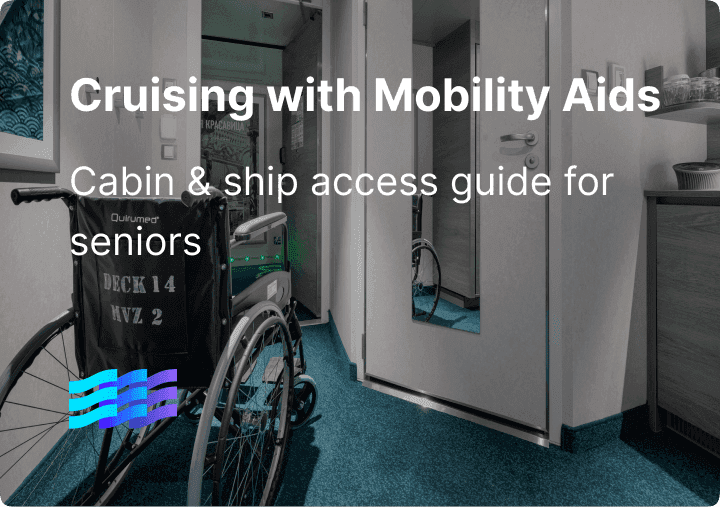
Cruising with Mobility Aids: Cabin & Ship Access Guide for Seniors
Cruise ships are among the most accessible vacation options for seniors using wheelchairs, mobility scooters, or walkers—but only when booked correctly. The difference between a seamless voyage and a frustrating one comes down to cabin category selection, itinerary research, and knowing the right questions to ask before you pay a deposit. This guide covers every practical detail, from ADA cabin measurements to tender port risks, so you can board with confidence.
Why Mobility Aid Planning Differs from General Senior Cruise Advice

General senior cruise tips—choose a mid-ship cabin, pick calmer seas, book shore excursions early—are useful but incomplete for travelers who rely on mobility aids. The stakes are higher and the variables more specific.
A standard balcony cabin doorway measures roughly 22–23 inches wide, which is too narrow for most power wheelchairs and many mobility scooters. An accessible cabin doorway typically measures 32–36 inches. Book the wrong category and you may not be able to enter your own room with your device. Similarly, not all "senior-friendly" itineraries account for tender ports, cobblestone historic centers, or ships where the accessible pool lift is out of service.
The planning framework for mobility aid users requires three distinct layers: ship selection, cabin category verification, and itinerary accessibility screening. Miss any one of them and the trip suffers.
Pro Tip: Always call the cruise line's dedicated accessibility desk—not the general reservations line—when booking. Representatives there have cabin-specific measurements and can flag known accessibility issues on your itinerary.
Wheelchair vs. Scooter vs. Walker: Which Cruise Ships Handle Best

Each mobility aid type interacts differently with ship infrastructure, and cruise lines vary in how well they accommodate each.
Manual and power wheelchairs require the most space—both in corridors and inside cabins. Fully Accessible Cabins (FAC) are designed specifically for wheelchair users, with turning radius clearance of at least 60 inches in the bathroom and beside the bed.
Mobility scooters are the most common aid seen onboard, but they present a unique challenge: they're longer than wheelchairs, often 40–50 inches from front to back, which means standard accessible cabins can feel cramped. Compact travel scooters (like the ATTO or similar fold-flat models) fare significantly better in tighter cabins. Royal Caribbean, Celebrity, and Holland America all require that scooters be stored inside the stateroom—not in hallways or elevator lobbies—for fire safety compliance.
Walkers and rollators are the most accommodating to manage onboard. Ambulatory Accessible Cabins (AAC), a distinct category offered by Carnival and several other lines, are designed for guests who walk with assistance but don't use a wheelchair or scooter full-time. These cabins feature grab bars and modified bathrooms without the full turning-radius clearance of FACs, and they're less scarce—meaning more availability and sometimes lower pricing.
| Aid Type | Recommended Cabin Category | Typical Door Width (~) | Corridor Navigation |
|---|---|---|---|
| Power wheelchair | Fully Accessible Cabin (FAC) | ~32–36 inches | Manageable on newer ships |
| Standard mobility scooter | Fully Accessible Cabin (FAC) | ~32–36 inches | Can be tight on older ships |
| Compact/folding scooter | FAC or ship-approved AAC | ~28–32 inches | Generally fine fleet-wide |
| Walker/rollator | Ambulatory Accessible Cabin (AAC) | ~24+ inches | Typically no significant issues |
| Cane only | Standard cabin | Standard | No significant issues |
Note: Door widths and cabin layouts vary by cruise line, ship, and cabin category. Measurements shown are approximate planning guidelines only. Always verify the exact cabin dimensions directly with the cruise line before booking.
Accessible Cabin Types: What ADA Compliance Actually Means Onboard
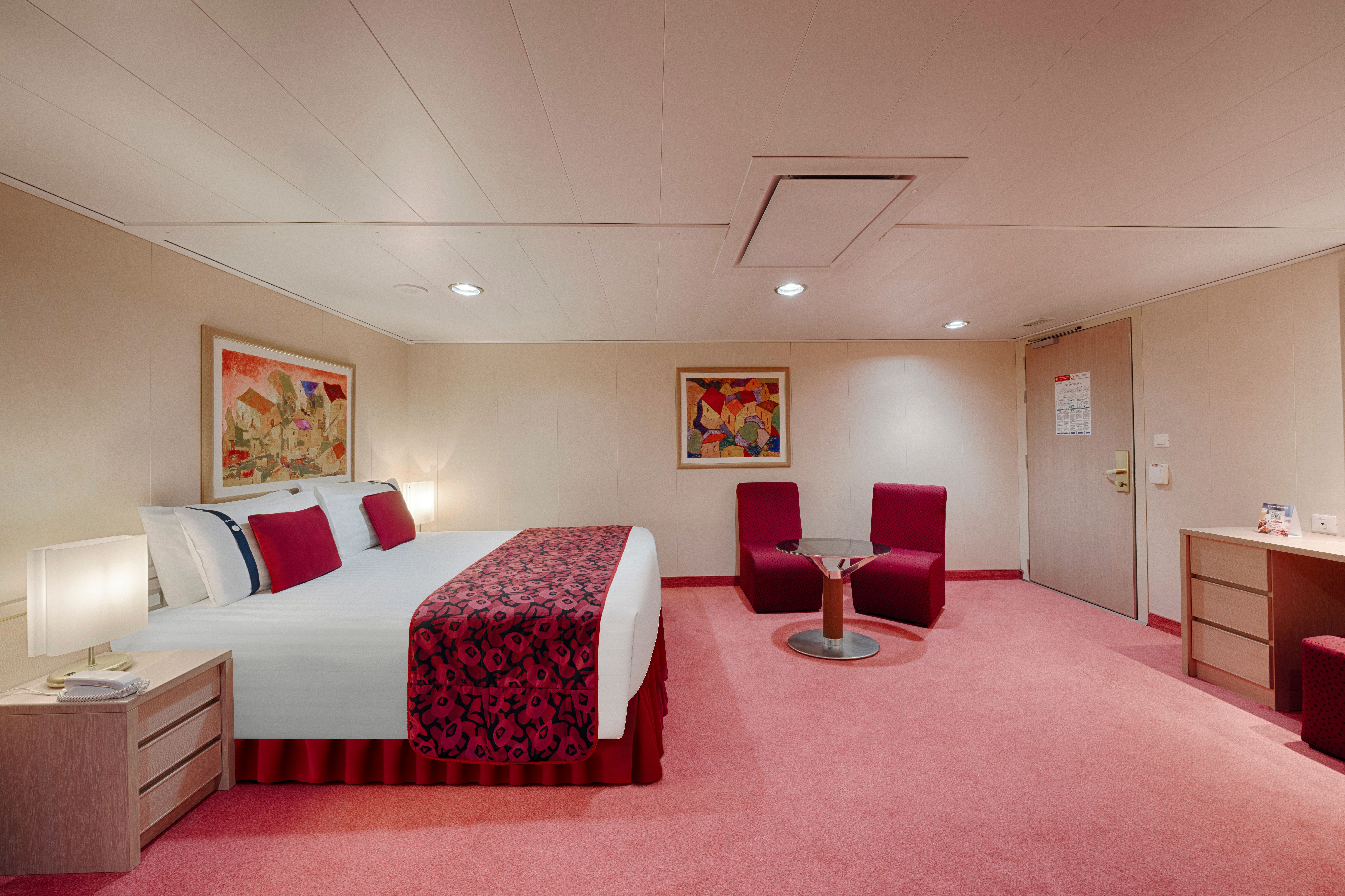
ADA compliance on cruise ships is more nuanced than on land. According to U.S. Department of Transportation accessibility guidance, approximately 3%–5% of guest staterooms on cruise ships operating from U.S. ports are designed to meet ADA accessibility standards. While exact inventory varies by ship and cruise line, accessible cabins remain a limited portion of total stateroom availability and often sell out well before standard cabin categories on popular sailings.
Cruise lines typically offer three distinct accessible cabin designations:
Fully Accessible Cabins (FAC): The highest level of accessibility. Features include roll-in showers with fold-down benches, handheld showerheads, grab bars at the toilet and shower, lowered closet rods, wider entry and bathroom doors (32–36 inches), and a 60-inch turning radius beside the bed and in the bathroom. These are designed for guests who use wheelchairs or scooters full-time.
Fully Accessible Cabins – Single Side Approach (FAC-SSA): A subset of FAC cabins where the clear floor space beside the bed is on one side only. These are suitable for wheelchair users who transfer from one consistent side. Carnival uses this designation explicitly; other lines may offer equivalent configurations under different names.
Ambulatory Accessible Cabins (AAC): Designed for guests with mobility limitations who do not require a wheelchair or mobility scooter for everyday use. These cabins typically include features such as grab bars, shower seating, and other mobility-friendly modifications, but may not provide the wider doorways, roll-in showers, or wheelchair turning space found in Fully Accessible Cabins. Specific features and dimensions vary by cruise line and ship.
Pro Tip: Some mobility scooter users who can transfer independently may find an Ambulatory Accessible Cabin (AAC) sufficient. Because AAC features vary by cruise line and ship, always confirm door widths, shower configuration, and mobility-device compatibility before booking.
Key Cabin Measurements to Request Before Booking

Never rely solely on a cruise line's website description. Request these specific measurements in writing before confirming any accessible cabin booking:
- Entry door clear width (target: 32 inches minimum for wheelchair/scooter)
- Bathroom door clear width (target: 32 inches)
- Roll-in shower dimensions (width × depth; confirm zero threshold)
- Turning radius beside the bed (target: 60 inches)
- Bed height from floor (important for transfers; typically 20–24 inches)
- Closet rod height (lowered rods should be at 48 inches or below)
- Balcony door threshold height (even 2-inch lips can block scooter access)
- Distance from cabin to nearest elevator
Holland America's Pinnacle-class ships (ms Koningsdam, ms Nieuw Statendam) are frequently cited by accessibility advocates for their thoughtful FAC layouts, with generous bathroom turning radii and low-threshold balcony doors. Princess Cruises' newer ships, including Sun Princess, have also improved balcony threshold design significantly.
For a deeper dive into how cabin selection affects your overall experience, see our guide on how to choose the best room on a cruise ship.
Scooter Rental vs. Bringing Your Own: Cost and Logistics Breakdown
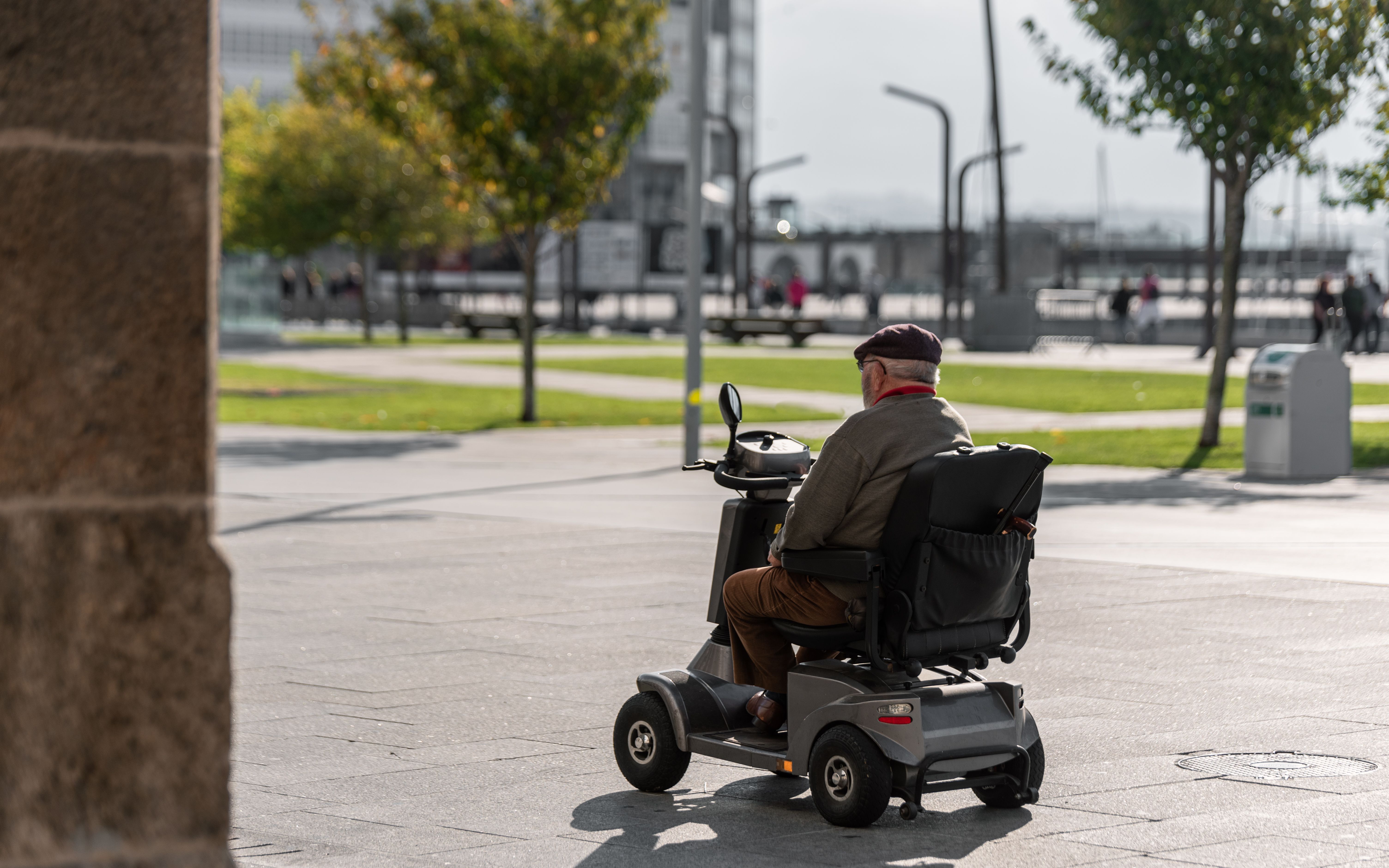
Bringing your own scooter gives you a familiar device but adds logistics. Renting through a cruise-approved vendor simplifies travel but costs more over a 7-day voyage.
| Factor | Bringing Your Own | Renting Through Vendor |
|---|---|---|
| Typical cost | Equipment already owned | $175–$350+ for 7-day rental |
| Delivery | Must transport to port | Delivered to cabin before boarding |
| Familiarity | High—your own device | Low—learning a new model |
| Battery concerns | Must manage airline/transport rules | Vendor handles battery compliance |
| Breakdown risk | You're responsible for repairs | Vendor provides replacement |
| Port use | Full flexibility | Confirm if rental covers shore use |
Scootaround and CARE Vacations are among the most widely used cruise scooter rental providers, offering delivery to many major U.S. embarkation ports and directly to cruise ship cabins. Rental costs typically start around $175–$250 for a 7-day rental, depending on the vendor, port, and scooter model, with higher costs possible for heavy-duty scooters, specialty equipment, or longer rental periods. Book rentals at least 30–60 days in advance for peak-season sailings.
If bringing your own, confirm that your mobility scooter's battery complies with FAA and airline requirements before traveling. Many lithium-ion mobility-device batteries up to 300Wh are permitted for air travel, but handling requirements vary by battery design and airline. In some cases, the battery may remain installed on the device; in others, it may need to be removed and carried in the cabin.
Pro Tip: Pack a small power strip in your carry-on. Cruise cabins typically have only one or two accessible outlets, and you'll need to charge your scooter nightly while also keeping your phone and other devices powered.
Tender Ports: The Biggest Risk for Mobility Aid Users
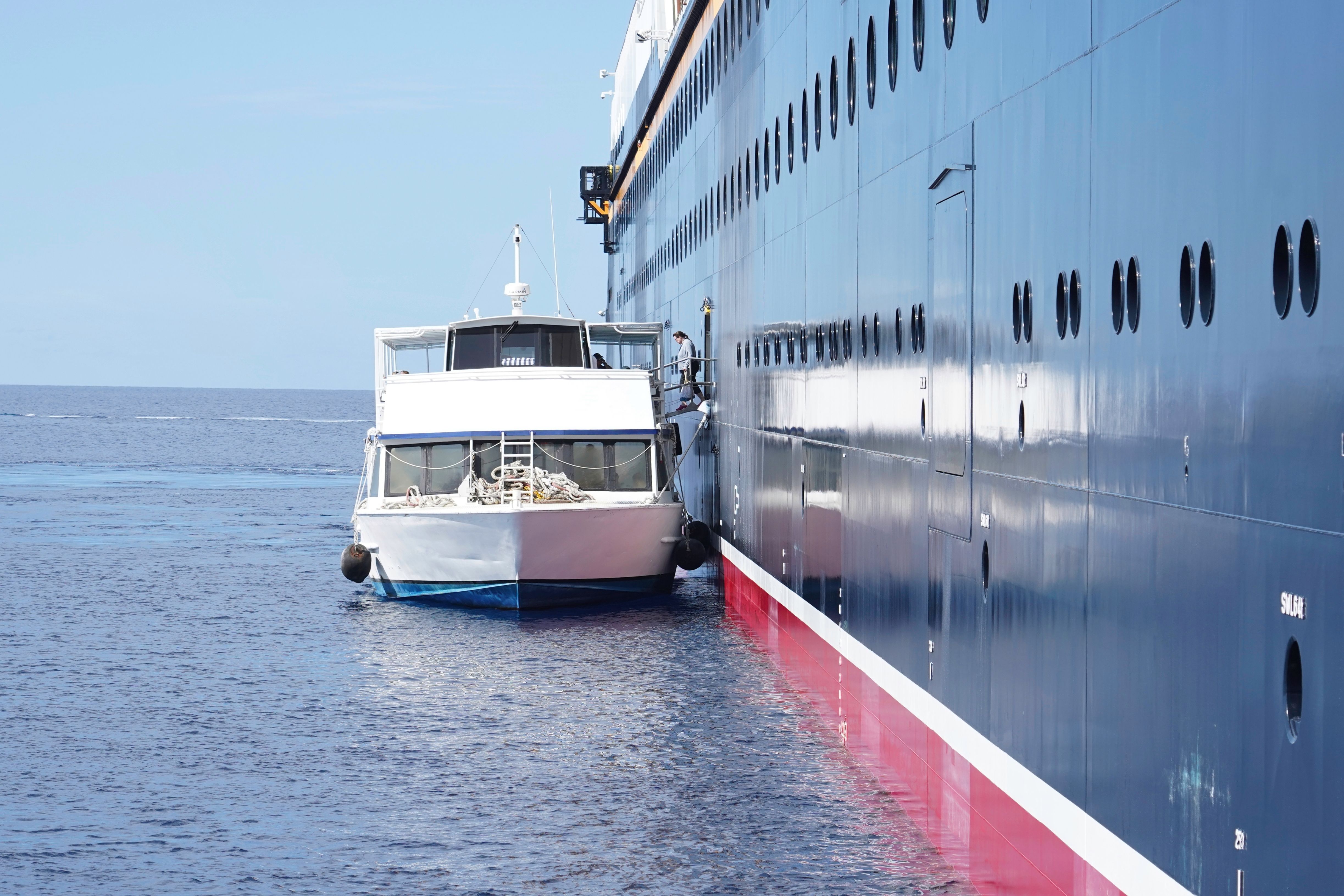
Tender ports are the single greatest accessibility risk on any itinerary. When a ship cannot dock directly at a pier, passengers are ferried ashore in smaller tender boats—a process that involves stepping down into a rocking vessel, often via a gangway with no elevator access.
Most cruise lines have a blanket policy: mobility scooters and power wheelchairs cannot be transported on tender boats. Manual wheelchairs may be permitted at the captain's discretion depending on sea conditions, but this is never guaranteed.
Common tender ports that catch mobility aid users off guard:
- Santorini, Greece (tender-only; also requires a steep cable car or donkey path to reach the town)
- Kotor, Montenegro (sometimes tender depending on vessel size)
- Bora Bora, French Polynesia (tender-only)
- Catalina Island, California (tender-only)
- Grand Cayman, Cayman Islands (commonly accessed by tender)
Before booking any itinerary, request the port access type for every stop. A 10-night Mediterranean itinerary with three tender ports may significantly limit shore access for scooter and power wheelchair users.
Pro Tip: If Santorini is on your itinerary, ask the cruise line exactly how passengers will go ashore—Old Port/Fira tender plus cable car, Athinios transfer arrangements, or cruise-line excursion transfer—and whether scooters or power wheelchairs can be accommodated.
Embarkation and Debarkation: What to Expect at Each Stage

Embarkation at major U.S. cruise terminals is generally well-managed for mobility aid users. Port Canaveral, PortMiami, and the Port of Seattle all have wheelchair assistance available from the curb. Notify your cruise line at least 48 hours in advance if you need wheelchair escort assistance through the terminal—this is separate from your onboard accessibility cabin request.
Luggage handling: your mobility device should be with you throughout check-in. Do not check a scooter with porters unless the cruise line has explicitly arranged for it; devices left with luggage handlers risk damage or delayed delivery to your cabin.
Onboard embarkation day: accessible cabins are typically available at the same time as all other cabins (usually 1:00–2:00 PM), but you can request priority cabin access through the accessibility desk when you pre-register your needs.
Debarkation is often more stressful. Self-assist disembarkation (carrying your own luggage off first) may not be practical with a mobility device. Request assisted debarkation, which typically means waiting in a designated lounge and being escorted off by crew after the self-assist rush. This is quieter and involves less crowding—actually preferable for most mobility aid users.
Pro Tip: At debarkation, have your mobility device fully charged the night before and keep your charger in your carry-off bag rather than checked luggage. You'll need it operational from the moment you leave the ship.
Cruise Line Accessibility Policy Comparison
Accessibility quality varies significantly by cruise line. Newer ships across all lines tend to outperform older vessels, but company-wide policies and staff training differ.
| Cruise Line | FAC Availability | Scooter Policy | Tender Port Assistance | Accessibility Desk |
|---|---|---|---|---|
| Royal Caribbean | Strong on Oasis/Icon-class | Must store in cabin; 23-inch min. door | No scooters on tenders | Yes, dedicated team |
| Carnival | FAC + FAC-SSA + AAC categories | Must store in cabin | No scooters on tenders | Yes |
| Holland America | Excellent on Pinnacle-class | Must store in cabin | Manual WC may be assisted | Yes |
| Celebrity Cruises | Good on Edge-class | Must store in cabin | Case-by-case for manual WC | Yes |
| Princess Cruises | Improving on newer ships | Must store in cabin | No scooters on tenders | Yes |
| Norwegian Cruise Line | Available fleet-wide | Must store in cabin | No scooters on tenders | Yes |
| Viking Ocean | Limited (smaller ships) | Must store in cabin | Limited assistance | Accessibility support |
Holland America's demographic skews heavily toward seniors, which translates into more practiced crew, more accessible shore excursion options, and a quieter onboard environment that's easier to navigate. For a detailed comparison of Holland America versus Princess—two lines particularly popular with senior travelers—see our Princess Cruises vs. Holland America breakdown.
Packing Checklist for Seniors with Mobility Aids

Beyond standard cruise packing, mobility aid users need a dedicated checklist:
Mobility Device Essentials
- Battery charger + backup charging cable
- Power strip (cruise ships limit outlets; non-surge models required per most line policies)
- Scooter/wheelchair repair kit (puncture repair, Allen keys, zip ties)
- Manufacturer's manual and warranty card
- Copy of battery specifications (for airline and port security)
Cabin Comfort
- Portable grab bar (suction-cup models for bathrooms without adequate bars)
- Non-slip bath mat (cabin shower mats vary in quality)
- Bed rail (if transferring independently; confirm cruise line allows installation)
- Nightlight (for safe navigation to bathroom in dark cabin)
Medical & Documentation
- Physician's letter describing mobility needs and any medical equipment
- Prescription copies for any medications
- Travel insurance documentation (confirm it covers mobility device damage/loss)
- Cruise line accessibility confirmation in writing
Shore Excursion Planning
- Printed list of accessible shore excursions pre-booked through the cruise line
- Portable ramp (small folding models for low lips and curbs ashore)
- Waterproof bag for device controls in rainy ports
Questions to Ask Your Cruise Line Before You Book
These specific questions—asked to the accessibility desk, not general reservations—will surface problems before they become onboard emergencies:
- What are the exact entry door and bathroom door widths (in inches) for the accessible cabin I'm booking?
- What is the balcony door threshold height?
- Is the roll-in shower a true zero-threshold, or is there a lip?
- Which ports on this itinerary are tender ports, and what is your policy for mobility device users at those ports?
- Where is the nearest elevator to my cabin, and what is the elevator door width?
- Does the pool deck have a lift, and is it operational year-round?
- What is your policy if my scooter requires repair during the voyage?
- Is there a quiet embarkation/debarkation process for guests with mobility needs?
- Are there accessible shore excursions at every port, and which are rated for scooter/wheelchair use?
- Can I pre-register my mobility device dimensions so crew can prepare the cabin in advance?
Get all answers in writing—email confirmation or a reference number from the accessibility desk. This documentation matters if there's a discrepancy at check-in.
Key Takeaways
- Book accessible cabins as early as possible—they represent roughly 3%–5% of inventory fleet-wide and sell out months ahead on popular sailings.
- Cabin category matters more than ship size: always verify FAC vs. AAC vs. FAC-SSA and request exact measurements in writing before confirming.
- Tender ports are a hard barrier for scooter and power wheelchair users—screen every port on your itinerary before booking, not after.
- Holland America and Royal Caribbean's newer ships are consistently ranked among the best for accessibility infrastructure and onboard support.
- Rental scooters from cruise-approved vendors are the lowest-friction option for travelers who don't want to manage device transport logistics.
Frequently Asked Questions
Q: How early should I book an accessible cabin on a cruise ship?
Accessible cabins account for roughly 3%–5% of total inventory on many ships, making them one of the first cabin categories to sell out. For peak season sailings—Caribbean in winter, Alaska in summer, Mediterranean in spring/fall—book 9–12 months in advance. Last-minute accessible cabin availability is rare on popular itineraries.
Q: Can I bring my mobility scooter on a cruise ship tender boat?
Most cruise lines do not permit power wheelchairs or mobility scooters on tender boats due to weight, size, and safety constraints. Manual wheelchairs may be assisted onto tenders at the captain's discretion based on sea conditions, but this is never guaranteed. If your itinerary includes tender ports, plan to remain onboard or confirm with the cruise line what alternatives exist.
Q: What is the difference between a Fully Accessible Cabin and an Ambulatory Accessible Cabin?
A Fully Accessible Cabin (FAC) is designed for guests who use wheelchairs or scooters full-time, featuring roll-in showers, 60-inch turning radius clearance, and wider doorways (32–36 inches). An Ambulatory Accessible Cabin (AAC) is designed for guests who walk with assistance (cane, walker) but don't require a wheelchair—it has grab bars and a shower seat but typically includes a small shower threshold and narrower doorway than an FAC.
Q: Do cruise ships charge extra for accessible cabins?
Accessible cabins are priced within their standard category—an accessible balcony cabin is generally priced comparably to a standard balcony cabin of similar size. However, because accessible cabins are often larger, they may fall into a higher pricing tier than the smallest standard cabins in the same category.
Q: Which cruise lines are best for wheelchair users?
Royal Caribbean (particularly Oasis-class and Icon-class ships), Holland America (Pinnacle-class), and Celebrity Cruises (Edge-class) consistently receive high marks for wheelchair accessibility based on cabin design, crew training, and accessible public spaces. Holland America is particularly noted for its senior-oriented service culture and accessible shore excursion programming.
Q: Can I rent a mobility scooter at the cruise port instead of bringing my own?
Yes. Vendors like Scootaround and CARE Vacations deliver rental scooters directly to your cabin before boarding at most major U.S. cruise ports. Book at least 30–60 days in advance for peak season sailings. Confirm whether the rental covers use ashore at ports of call, as policies vary by vendor.
Fast Facts
- Best For: Seniors and travelers with mobility limitations using wheelchairs, scooters, or walkers
- Cabin Types to Request: Fully Accessible Cabin (FAC), FAC-Single Side Approach, Ambulatory Accessible Cabin (AAC)
- Key Measurement: Entry door clear width of 32+ inches for wheelchair/scooter users
- Best Time to Book: 9–12 months in advance for peak season sailings
- Top Lines for Accessibility: Holland America (Pinnacle-class), Royal Caribbean (Oasis/Icon-class), Celebrity Cruises (Edge-class)
- Biggest Itinerary Risk: Tender ports—verify every port's access type before booking
- Scooter Rental Contact: Scootaround or CARE Vacations; book 30–60 days out
- Top Pick for Seniors: Holland America ms Nieuw Statendam for accessibility infrastructure and senior-focused service culture