Best Deck for Sea Sickness on a Cruise Ship: Motion Guide
The best deck for avoiding seasickness is generally a lower passenger deck, with a cabin near the middle of the ship. The exact deck number varies by ship, so check its deck plan before booking. This position tends to reduce the up-and-down pitching and side-to-side rolling motion you feel. Choosing the right cabin can make the difference between an uncomfortable first sea day and barely noticing the ocean at all.
Why Deck Choice Affects Seasickness
Seasickness is caused by sensory conflict — your inner ear detects motion that your eyes don't register, triggering nausea, dizziness, and disorientation. On a cruise ship, where you are on the vessel affects how much motion you feel, though sea conditions and your sensitivity to motion also play a role.
A cruise ship moves in six degrees of freedom, but the two that matter most to passengers are pitch (bow rising and falling) and roll (side-to-side swaying). Your cabin's position relative to the ship's center of gravity determines how much of each type of motion you'll feel. The further you are from that center point — whether forward, aft, or high up — the more pronounced the movement becomes.
This is why deck selection isn't just a comfort preference. For motion-sensitive passengers, it's a medical decision that should happen at the time of booking, not after embarkation.
Pro Tip: When searching for cabins on Cruisebound, filter by deck number, then use the ship’s full deck plan to find cabins near the midpoint between the bow and stern. Check each cabin’s position on its deck before booking.
Pitch vs. Roll: Understanding the Two Types of Ship Motion
Pitch is the front-to-back rocking motion — the bow rises and falls as the ship climbs and descends ocean swells. Roll is the side-to-side motion caused by beam seas (waves hitting the ship from the side). Both can trigger nausea, but they're countered by different cabin placement strategies.
| Motion Type | Cause | Worst Location | Best Location |
|---|---|---|---|
| Pitch | Head-on swells | Bow and stern cabins | Midship cabins |
| Roll | Beam seas (side swells) | High decks | Low decks |
| Combined | Rough open ocean | High deck, forward/aft | Low deck, midship |
Understanding which type of motion you're most sensitive to helps refine your cabin choice. Most passengers are bothered by both, which is why the low-midship combination is the universal recommendation — it addresses both pitch and roll simultaneously.
The Sweet Spot: Why Low and Midship Works
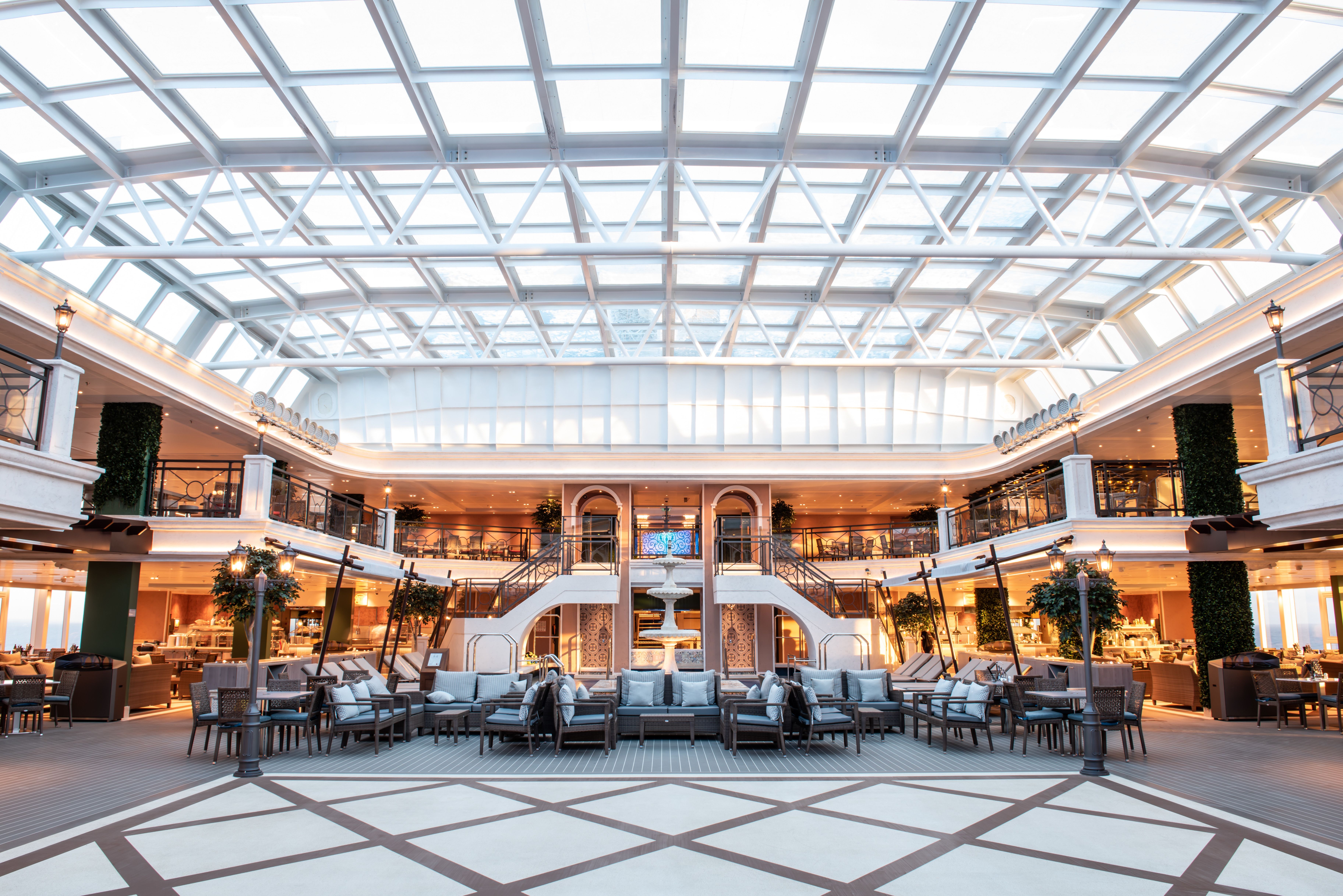
The physics are straightforward. Think of a cruise ship like a seesaw: the center experiences the least movement, while the ends experience the most. Extend that analogy vertically — a tall building sways more at the top than at the base — and you have the full picture.
Midship placement reduces pitch because you're at the pivot point of the ship's forward-aft rocking. Low deck placement reduces roll because you're closer to the ship's waterline and center of mass, where lateral movement is dampened.
On many large cruise ships, a cabin on a lower passenger deck near midship can help reduce the motion you feel. The best deck number varies by ship, so check its deck plan rather than relying on a fixed range. On smaller vessels, a lower deck may also be worth considering, provided a midship cabin is available.
Pro Tip: On ships with interior atriums, such as Royal Caribbean’s Oasis Class or Norwegian’s Prima Class, use the full deck plan to check whether nearby cabins sit close to the midpoint between bow and stern. A cabin on a lower deck near that midpoint may help reduce the motion you feel.
Deck Height Trade-Offs: Low vs. High
Higher decks often offer better views, easier pool access, and more premium cabin categories. For motion-sensitive passengers, though, rolling may feel more pronounced higher up. On a large ship in moderate seas, the difference between a lower midship cabin and a high-deck cabin can be noticeable.
| Deck Range | Motion Level | Trade-Off |
|---|---|---|
| Deck 2–4 | Generally less motion, especially midship | Views may be limited; some cabins have portholes |
| Deck 5–7 | Low to moderate motion, especially midship | Often a good balance of stability and views |
| Deck 8–11 | Motion may be more noticeable in rough seas | Better views on many ships |
| Deck 12–16+ | Sway may feel more pronounced, especially away from midship | Premium views on many ships |
One nuance competitors often miss: cabins on very low decks, such as Deck 2 or 3, can sometimes feel more mechanical noise or vibration, particularly toward the aft of the ship. If you’re sensitive to both motion and noise, a midship cabin around Deck 4–6 may offer a good balance of stability, quiet, and comfort. Check the ship’s deck plan before booking.
Bow vs. Stern: Which End Is Worse?

Both the bow (front) and stern (rear) experience more motion than midship, but they move differently.
The bow bears the brunt of head-on swells. When the ship plows into waves, the bow rises and falls dramatically — this is pure pitch, and it's felt most intensely in forward cabins. In rough North Atlantic or Alaskan waters, bow cabins on higher decks can feel genuinely disorienting.
The stern is affected by both the ship's propulsion system (vibration) and the wake turbulence created as the vessel moves forward. Aft cabins also tend to pitch more than midship, though slightly less dramatically than the bow in head-on seas. The stern also experiences more noise and vibration from the engines and thrusters.
The verdict: For reducing motion, a midship cabin is generally the best choice. If only forward or aft cabins are available, compare how far each is from the ship’s midpoint and choose the one closer to it, ideally on a lower deck. Neither end is as reliable a choice as true midship.
Pro Tip: On itineraries with significant open-ocean crossings (transatlantic routes, Pacific crossings, or repositioning cruises from Europe to the US), the bow vs. stern distinction becomes much more consequential. Prioritize midship placement above all else for these sailings.
Best Specific Deck Ranges by Ship Size
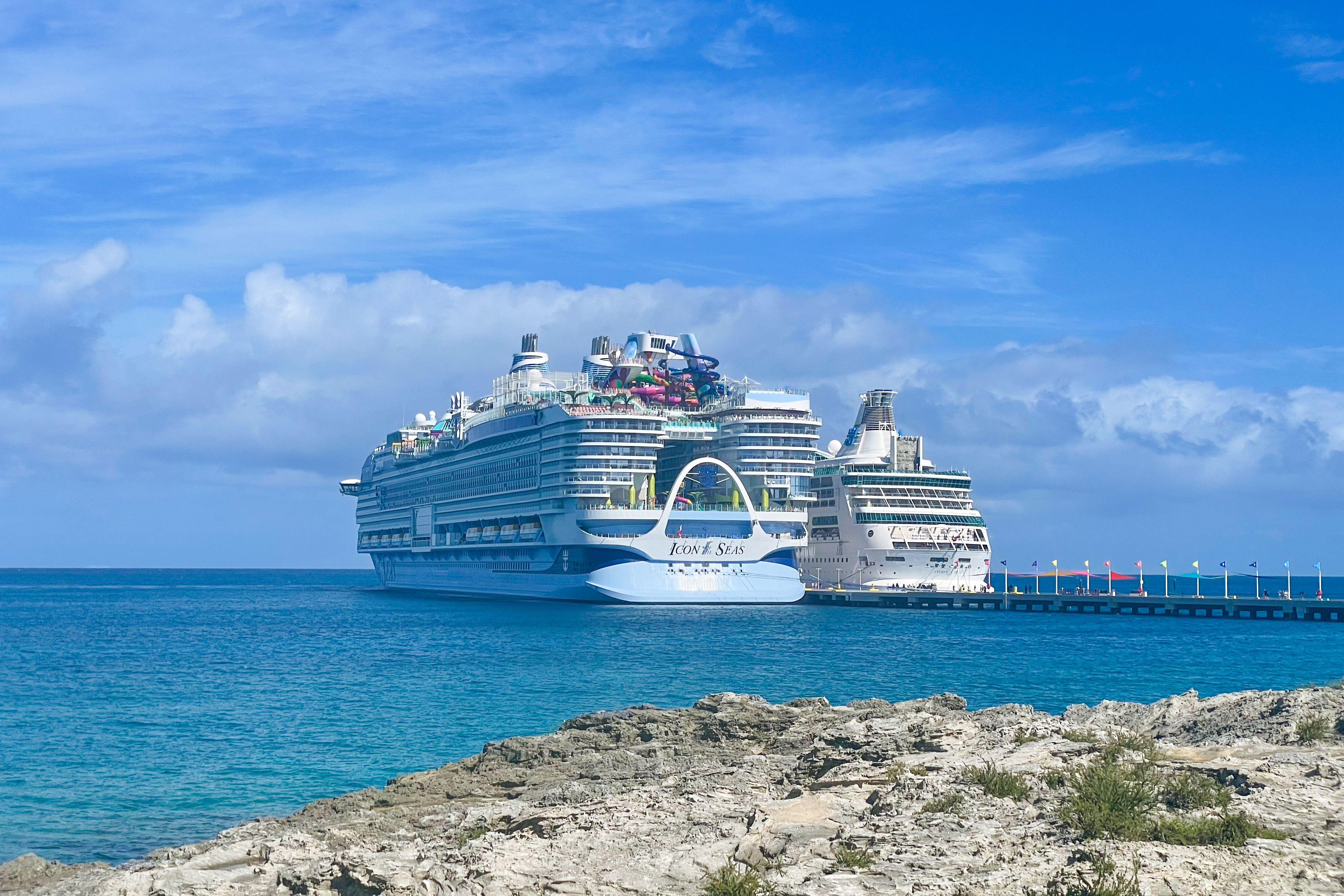
Ship size can make a noticeable difference in how much motion passengers feel. At approximately 250,800 gross tons, Icon of the Seas may respond to swells differently from a much smaller, roughly 30,000-gross-ton expedition ship, though sea conditions and ship design also matter.
| Ship Category | Example Ships | Recommended Cabin Location | Notes |
|---|---|---|---|
| Mega-ships (180,000+ GT) | Icon of the Seas, Wonder of the Seas, MSC World America | Lower passenger deck, midship | Size and stabilizers can reduce felt motion, but sea conditions still matter |
| Large ships (90,000–180,000 GT) | Celebrity Ascent, Norwegian Bliss, Sun Princess | Lower passenger deck, midship | Check the ship’s deck plan rather than relying on a fixed deck number |
| Mid-size ships (50,000–90,000 GT) | Oceania Riviera | Lower passenger deck, midship | Compare cabin height and distance from the bow and stern |
| Small ships (<50,000 GT) | Azamara Quest, Seabourn Encore, Viking expedition ships | Lower passenger deck, midship | Available cabin decks vary by ship |
| River cruise ships | Viking Longships, AmaWaterways ships | Choose based on the vessel’s layout and your preferences | Ocean-style pitching and rolling are generally less of a concern |
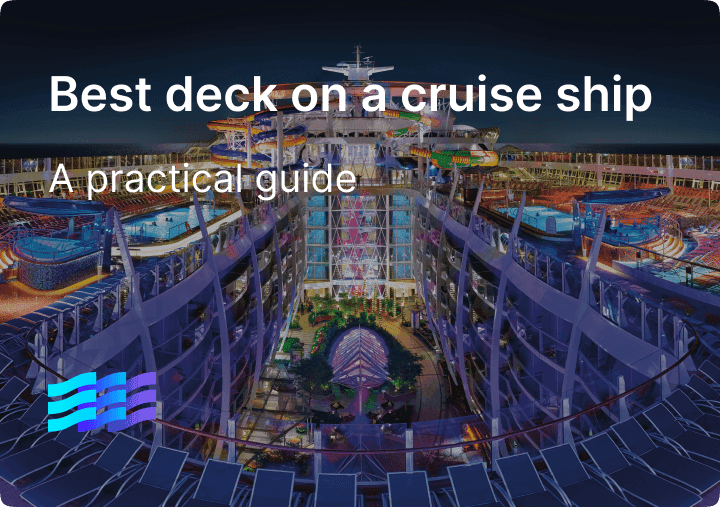
For more on how ship class and size affect the onboard experience, our guide to the best deck on a cruise ship breaks down deck-by-deck trade-offs across different vessel types.
Cabin Type Considerations: Inside vs. Balcony

Cabin type interacts with deck choice in ways that matter for motion-sensitive passengers.
Inside cabins on lower midship decks are the most stable option on the ship — but they have no windows. This can actually worsen seasickness for some passengers, because the visual disconnect between what your eyes see (a static room) and what your body feels (motion) intensifies the sensory conflict. If you book an inside cabin, plan to spend time on deck where you can see the horizon.
Oceanview cabins offer a porthole or window, which helps your visual system sync with the motion your body feels. This is a meaningful upgrade for motion-sensitive travelers, even if the view itself is modest.
Balcony cabins offer fresh air, horizon views, and the ability to step outside if nausea strikes. However, balconies are often on higher decks, where rolling may feel more pronounced. If you want a balcony, look for one on a lower available deck and prioritize a midship location.
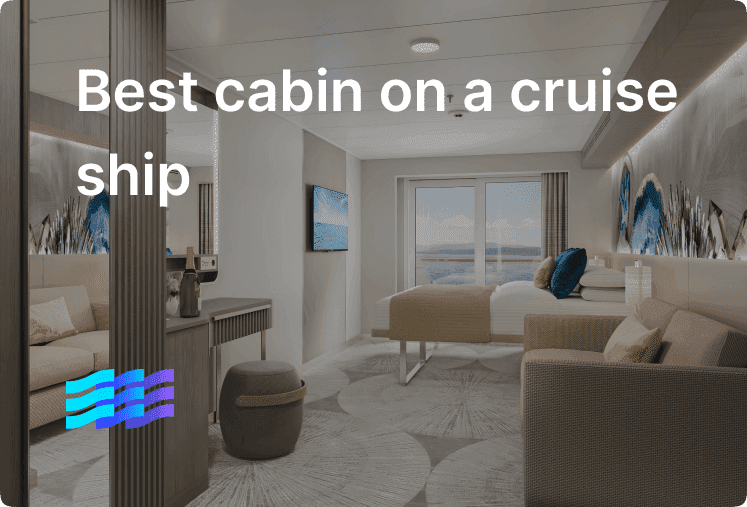
For a deeper look at how to choose between cabin types based on your cruising priorities, our complete room selection guide covers the full decision framework.
Pro Tip: If you're prone to seasickness but want a balcony, look for ships where balcony cabins begin on Deck 6 or 7 — this keeps you close to the stability sweet spot while still giving you outdoor access and a horizon view.
Other Factors: Stabilizers, Itinerary, and Season
Cabin location is the most controllable factor in managing seasickness — but it doesn't operate in isolation.
Modern stabilizers often use fins that extend from the hull to reduce rolling motion. They can be effective in moderate seas and are fitted on many large cruise ships. Their performance varies by ship and sea conditions. Because stabilizers primarily address roll rather than pitch, a midship cabin can still help reduce the motion you feel.
Itinerary matters enormously. Sheltered portions of Caribbean, summer Mediterranean, and Norwegian fjord routes may feel calmer than exposed open-ocean crossings, though conditions vary by weather and route. On itineraries with significant sea days in the North Atlantic, South Pacific, or Drake Passage, cabin location deserves extra attention. If you're booking a transatlantic cruise or a repositioning voyage, invest extra effort in securing a low midship cabin.
Season affects wave height. During the Atlantic hurricane season (June–November), storms can produce higher swells on Caribbean routes, though conditions vary by sailing date and weather. Alaska sailings can also encounter different sea conditions across the season, particularly on exposed stretches of a route. Consider the sailing window alongside cabin location, and check marine forecasts as departure approaches.
Seasickness Remedies as a Backup Plan
Even the best cabin placement can't guarantee a motion-free experience in severe weather. Having remedies on hand is smart preparation, not an admission of defeat.
Before sailing:
- Scopolamine patches (Transderm Scōp): Prescription-only in the U.S. and applied behind the ear. Each patch lasts up to 72 hours; apply it at least 4 hours before you need it to work.
- Meclizine (Bonine/Dramamine Less Drowsy): Over-the-counter antihistamine; take 1 hour before boarding.
- Ginger supplements or chews: Some passengers use them, but evidence that ginger prevents motion sickness is limited and mixed.
Onboard:
- Acupressure wristbands: Some passengers find them helpful, although studies have not shown a benefit beyond placebo.
- Ship's medical center: Medical staff can assess and treat seasickness, though available medications vary by ship. Don’t hesitate to visit if symptoms are severe or persistent.
- Fresh air and horizon focus: Step onto an open deck, fix your gaze on the horizon, and let your visual system recalibrate. This is one of the most effective immediate interventions available.
For a detailed breakdown of every pharmaceutical and non-pharmaceutical option, our best motion sickness medicine for cruises guide covers dosing, timing, and which options work best for different passenger profiles.
Key Takeaways
- For avoiding seasickness, a lower-deck cabin near midship is generally your best choice — this position can reduce the pitch (bow-to-stern rocking) and roll (side-to-side swaying) you feel. Check your ship’s deck plan for available cabin numbers.
- Rolling may feel more pronounced on higher decks, particularly in rough seas. If you’re sensitive to motion, compare cabin height as well as its position along the ship.
- Bow and stern cabins can feel more pitching than midship cabins. When choosing between cabins, look for one closer to the ship’s midpoint.
- Ship size can affect how much motion you feel, but ship design and sea conditions also matter. The lower-midship guidance applies across ship sizes.
- Itinerary and season matter alongside cabin location. Check for exposed sea days and keep an eye on forecasts, especially for open-ocean crossings and Caribbean sailings during hurricane season.
Frequently Asked Questions
Q: What is the best deck number to avoid seasickness on a cruise ship?
A lower passenger deck near midship is generally the best place to start, though the ideal deck number varies by ship. This location can reduce the pitching and rolling motion you feel while still offering comfortable cabin options. On a mega-ship, a midship cabin on a somewhat higher deck may also be comfortable, depending on the ship’s design and sea conditions. Check the ship’s deck plan before choosing a cabin.
Q: Is the front or back of a cruise ship worse for seasickness?
Both the bow and stern experience more motion than midship, but the bow tends to be worse in head-on swells because it takes the full force of the waves. The stern can suffer from engine vibration and wake turbulence. For motion-sensitive passengers, neither end is ideal — true midship placement is always the priority.
Q: Does ship size affect how much motion you feel?
Yes. Ship size can make a noticeable difference in how much motion passengers feel, although ship design and stabilizers also matter. At approximately 250,800 gross tons, Icon of the Seas may feel steadier in moderate seas than a roughly 30,000-gross-ton expedition vessel, but size alone cannot guarantee that. No ship is immune to motion in rough weather, and cabin placement still matters even on the largest vessels.
Q: Can a balcony cabin help with seasickness?
A balcony can help because it gives you immediate access to fresh air and a horizon view — both of which help resolve the sensory conflict that causes nausea. However, balcony cabins are typically on higher decks where motion is more pronounced. The net effect depends on the individual: some passengers find the fresh air worth the trade-off, while others are better served by a lower-deck oceanview or inside cabin paired with regular trips to open deck areas.
Q: Do cruise ship stabilizers eliminate seasickness?
Stabilizers significantly reduce roll (side-to-side motion) in moderate seas but do not eliminate pitch (front-to-back motion) or motion in heavy swells. They are most effective on large ships in typical ocean conditions. In rough weather — particularly on open-ocean itineraries — stabilizers reduce but do not eliminate motion, which is why cabin placement and remedies remain important.
Q: Should I take seasickness medication even if I'm not sure I'll get sick?
For passengers who have experienced motion sickness in cars, planes, or boats — or who are sailing on an itinerary with significant open-ocean days — a preventive medication such as meclizine may be worth considering. Ask a clinician or pharmacist whether it’s suitable for you and follow the product’s directions. Motion-sickness medications generally work best when taken before symptoms begin. Consult your physician before using prescription options such as scopolamine patches.
Fast Facts
- Best For: Motion-sensitive passengers, first-time cruisers on open-ocean itineraries, passengers on smaller ships
- Optimal Cabin Location: A lower passenger deck near midship; check the ship’s deck plan
- Locations to Avoid: High cabins far forward or aft if you’re sensitive to motion
- Ship Size Factor: Size can affect felt motion; ship design and sea conditions also matter
- Itinerary Consideration: Exposed sea days may bring more motion; check the route and forecasts
- Medication planning: If you’re prone to motion sickness, ask a clinician or pharmacist about preventive options before sailing and follow the product’s directions
- Best Time to Book: Choose your cabin at initial booking for the widest selection of lower midship options